Is Raising Chickens Profitable? Run the Real Numbers
An honest cost-vs-revenue breakdown of raising backyard chickens: startup, feed, and egg prices — plus how to track your flock’s real profit and loss.
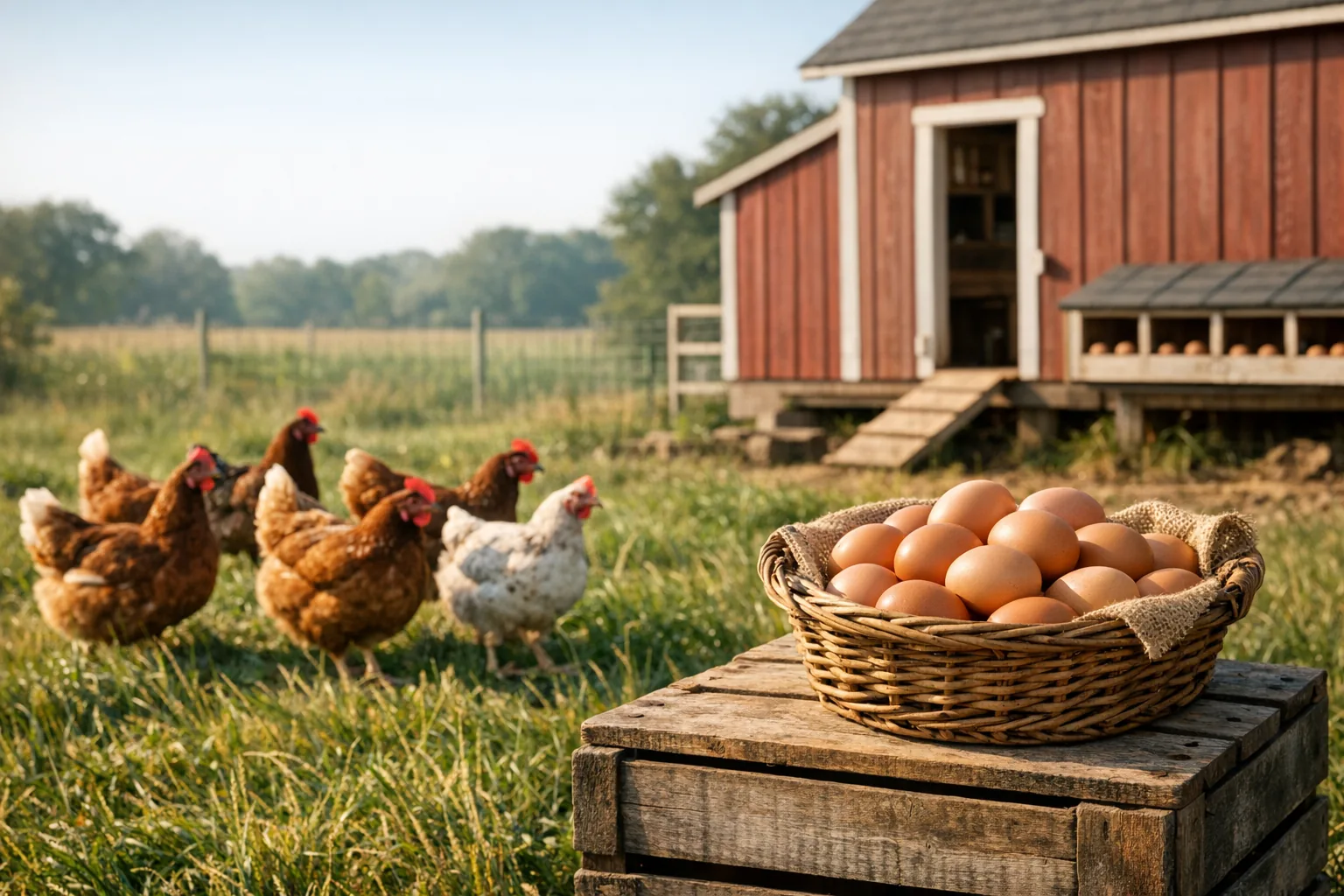
Someone asks it under every chicken video on the internet: are these things actually making you money? The honest answer is that most backyard flocks don’t — not because chickens are a bad deal, but because almost nobody runs the numbers, and the numbers are the whole game. Let’s run them properly, with no romance and no doom, so you can see where the line between hobby and profit actually sits.
The Three Numbers That Decide It
Profitability on a flock comes down to three buckets, and that’s it:
- Startup cost — the coop, run, fencing, feeder, waterer, brooder gear, and the birds themselves. This is a one-time hit you amortize over years.
- Ongoing cost — feed, bedding, the occasional bag of grit or oyster shell, and replacement birds. Feed dominates this by a wide margin.
- Revenue — eggs you sell (or the grocery eggs you no longer buy), plus any birds or chicks sold.
If revenue beats ongoing cost, the flock cash-flows. (Lay rate drives that revenue line; our guide to tracking egg production covers how to read it.) If it also covers the startup over a reasonable number of years, the flock is genuinely profitable. Most people only ever look at bucket three — “I sold $40 of eggs this month!” — and never subtract buckets one and two. That’s how a flock feels profitable while quietly losing money.
Startup: The Cost Everyone Underbudgets
A coop is where the optimism goes to die. A small store-bought coop for six birds runs a few hundred dollars and is usually flimsier than it looks; a solid coop and predator-proof run for a dozen hens can easily reach $800–$1,500 if you buy materials, and far more if you buy a finished one. Add a feeder, a waterer, fencing, and a brooder setup for chicks, and the gear alone can total more than two full years of feed.
Then the birds. Day-old chicks are cheap — a few dollars each — but you feed them for five to six months before the first egg, and you’ll lose a few along the way. Started pullets cost more up front (often $20–$35 each) but they’re laying almost immediately, which changes the math if you want revenue sooner.
The honest way to think about startup: it’s a fixed cost you spread across the years the coop lasts. A $1,200 coop over a 10-year life is $120 a year, or $10 a month, before a single hen has eaten anything. That number has to come off the top of every “profit” you calculate.
Ongoing: Feed Is the Whole Story
A laying hen eats roughly a quarter-pound to a third of a pound of feed per day — call it 7–10 lbs a month. At common layer-feed prices, that’s somewhere around $2.50–$4.50 per hen per month, and meaningfully more if you feed organic or non-GMO, which can nearly double it.
So a flock of 12 hens eats somewhere in the neighborhood of $35–$55 of feed a month, every month, laying or not. That last part matters: a hen still eats in winter and during her molt when she’s producing nothing. Your feed bill is flat; your egg income is seasonal. Plenty of keepers are cash-positive in spring and quietly underwater from November through February without realizing it, because they never line the two up on the same calendar.
Two leaks make feed cost worse than it should be. Waste — feed flung out of an open trough, eaten by wild birds, or raided by rodents at night — can quietly add 10–20% to the bill; a good treadle or port feeder pays for itself. And mismatched feed — feeding a high-protein ration to birds that don’t need it, or buying small bags at a premium instead of bulk.
Revenue: What Eggs Actually Sell For
Here’s the part people overestimate. Farm-fresh eggs typically sell for $4–$7 a dozen, with the top of that range reserved for pasture-raised or organic in areas that will pay for it. A productive hen lays roughly 20–24 dozen a year averaged across her good months and her molt. (Raising cattle instead? The cattle feed cost calculator runs the same cost-per-head math for a herd.)
Run it: a hen producing ~22 dozen a year at $5 a dozen is about $110 of gross egg revenue — against, say, $40 a year in feed. That looks like a healthy margin per hen until you remember the coop (your $10/month line), the birds you bought, the ones you lost to a hawk, and the hours you spent. Across a small flock, the per-dozen margin after everything is real but thin. You don’t get rich on six hens. You get cheaper eggs for your own kitchen and a small surplus that, sold steadily to a few regular neighbors, covers the feed and chips away at the coop.
Where it tips into actual profit:
- Scale. Fixed costs (coop, your time) don’t grow much from 6 hens to 20, so margin per dozen improves as you add birds — assuming you have buyers.
- Feed discipline. Buying in bulk and in season, cutting waste, and matching the ration is the single biggest lever you control.
- Price and positioning. Pasture-raised eggs from a local face command more than a number on a carton — but only if your buyers know the difference.
- A second product. Selling started pullets or hatching eggs in spring often out-earns the table eggs.
Why You Can’t Answer This From Memory
Notice what every honest version of this calculation requires: what you spent, what you sold, and how much your flock produced — tracked over a full year, not guessed at the end of a good month. Almost nobody does this, which is why “are the chickens worth it” stays a vibe instead of a number. The feed receipts are in a drawer, the egg sales are cash that got spent, and the production never got written down, so the books simply don’t exist.
That’s the gap FarmsFlo closes. You log feed and gear purchases as you make them, record egg sales and any bird sales, and track production right alongside — and the platform turns it into a real flock profit-and-loss you can actually read. Instead of feeling like the chickens pay for themselves, you’ll know your cost per dozen, your seasonal swing, and whether that next dozen birds pencils out. Basic records are on the Free tier; sales and inventory tracking come with Pro ($29/mo), and the full farm-P&L tools that make this a true business view are in Complete ($79/mo), both with a 14-day free trial. If you keep other livestock too, it all lives in the same books instead of three different notebooks.
The chickens are going to lay either way. Tracking is how you find out whether they’re a hobby that costs you or a small business that pays you — and which changes you’d have to make to flip one into the other.
Insider P.S. — if you keep chickens and know other folks who do, you can earn $10–$25/mo recommending FarmsFlo through the Insider program. It’s a recurring payout for the people you refer, not a one-time kickback — a small flock of referrals that actually feeds you back.