What It Really Costs to Raise a Cow (2026 Breakdown)
An itemized, honest cost-per-head breakdown of raising a cow in 2026: feed, hay, vet, breeding, and the fixed costs people forget — plus how to track it.
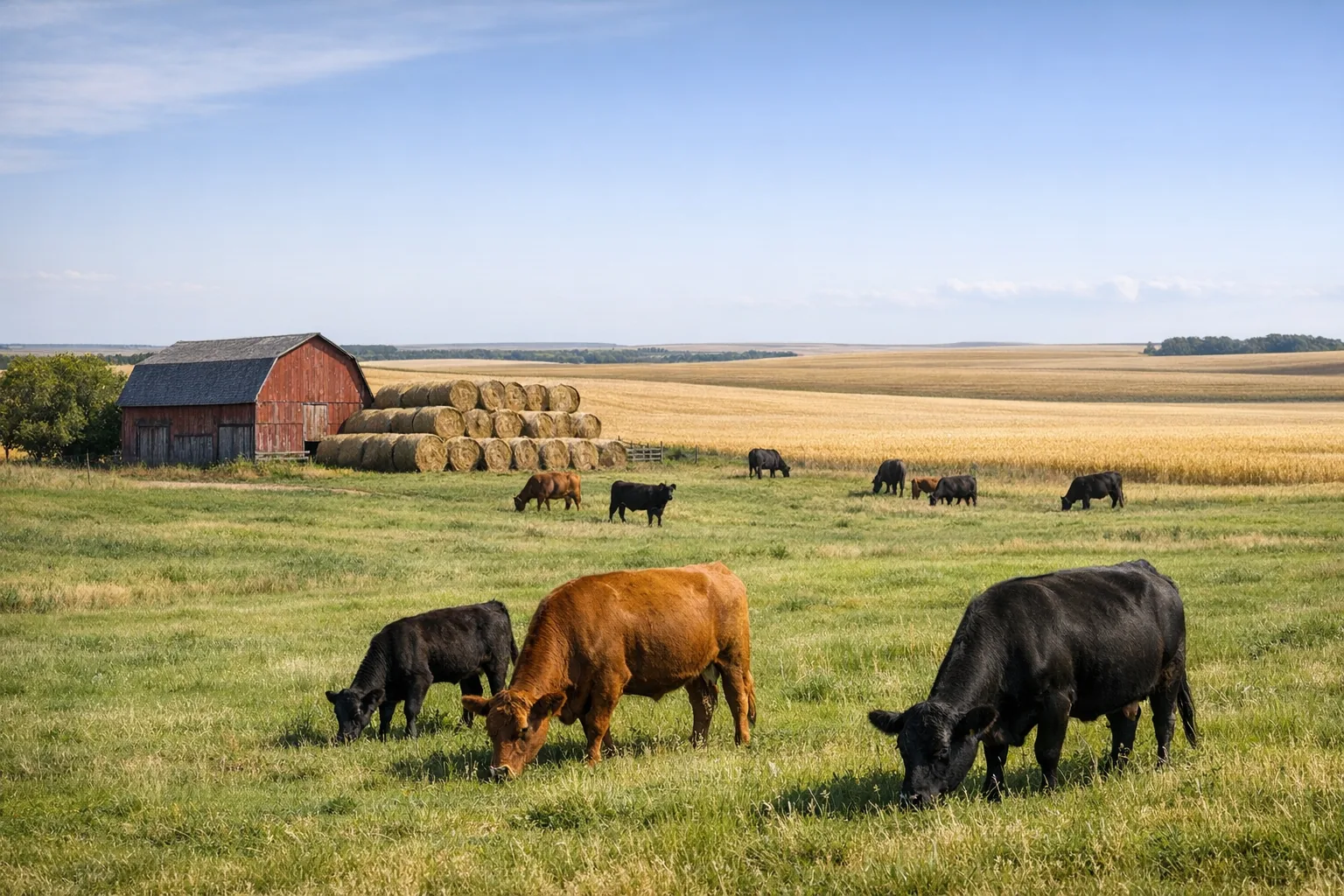
“How much does it cost to raise a cow?” is one of those questions with a useless average and a useful breakdown. The average — somewhere around $700 to $1,300 per head per year — hides everything that actually matters, because two operations with the same herd size can land at opposite ends of that range depending on one thing: how many days their cattle graze versus how much hay they buy. So let’s skip the single number and itemize it the way a producer actually budgets, with 2026 reality baked in.
Feed and Hay: More Than Half the Bill
This is the line that decides your year. Pasture is the cheapest feed on earth — a grazing cow harvests her own forage and spreads her own manure — so the single biggest lever on cost per head is your grazing days versus hay-feeding days.
When the grass stops, the hay starts, and hay is expensive in both money and waste. A mature 1,200-lb cow eats about 2.5% of her body weight in dry matter daily — roughly 30 lbs of hay. Over a 120-day winter that’s about 3,600 lbs, nearly two tons, before waste. Feed hay on the ground without a feeder and you’ll lose 20–30% to trampling and fouling, so the honest plan is closer to 2.5 tons per cow for a typical winter. At common hay prices that’s frequently the single largest cost on the whole operation.
The takeaway producers with good margins all share: they don’t find cheaper hay, they buy less of it — by extending the grazing season with rotation and stockpiled forage, and by cutting waste with feeders and proper storage. Every grazing day you add is a hay day you delete.
The Itemized Cost Per Head
Here’s the breakdown people actually need, with rough annual per-head ranges for a small beef operation in 2026. Yours will differ — that’s the point of tracking your own — but this is the shape of it:
- Pasture / grazing — lowest cost per day; often just your land cost and fence upkeep amortized.
- Winter hay — frequently the biggest single line; ~2–2.5 tons per cow plus waste.
- Mineral, salt, and supplements — modest but constant; a good mineral program is cheap insurance against poor conception and weak calves.
- Vet, health, and meds — vaccinations, deworming, and the occasional problem; budget for it even in a healthy year.
- Breeding — a share of the bull’s cost, or AI plus semen and labor. This gets cheaper per head the more cows you run.
- Fencing and water — fixed infrastructure that you amortize, plus ongoing repair. Easy to forget, never zero.
- Equipment and fuel — tractor, feeding gear, upkeep, and the diesel to run it.
- Death loss — the calf or cow you lose. It’s a real cost even though nobody likes to budget it.
- Your labor — the hours. Whether or not you pay yourself, it’s part of the true cost.
First-year budgets almost always capture feed and miss most of the rest, which is exactly why the cattle “cost more than expected.” The feed bill is rarely the surprise — the surprises are fixed and incidental costs that never made the spreadsheet.
The Two Calculators That Sharpen This
Two pieces of this are easy to nail down with a quick tool before you commit to a number.
For the feed line — the one that dominates — run your own figures through the cattle feed cost calculator. Plug in your head count, pounds of feed per head per day, your delivered cost per pound, and the number of days, and it returns your total feed cost and, more importantly, your cost per head. That single number is what you compare against the price you’ll get at sale.
For planning the year around your herd, the cattle gestation calculator turns a breeding or AI date into a calving date and trimester milestones — which matters for cost because the third trimester is when a cow’s nutrition needs climb the most. Knowing when each cow hits that window lets you feed her right without overfeeding the whole herd a finishing ration.
Is It Cheaper Than Buying Beef?
The question behind the question is usually whether raising your own beef beats the grocery store. Sometimes — if you have cheap pasture, do the work yourself, and keep waste down, a finished steer can yield beef at a competitive per-pound cost. But small-scale processing fees, fencing, and the feed to carry an animal from weaning to finish add up faster than people expect. The reliable wins from raising your own are quality and knowing exactly how the animal was raised, with cost savings as a bonus that depends entirely on your land and discipline — not a guarantee.
Why a Real Number Beats an Average
Every honest version of this budget depends on tracking costs against the herd over a full cycle — feed and hay, minerals, vet and breeding, a share of the fixed costs — and then setting them against what the cattle actually sold for. Cost per head over a cycle is the only figure that tells you whether the operation works, and it’s exactly the figure most operations don’t have, because the receipts are scattered and the sales were cash that got spent.
That’s where FarmsFlo earns its keep. You log feed and hay purchases, minerals, vet and breeding costs, and tie them to your herd; record your sales; and the platform rolls it into a real farm P&L with cost per head you can read at a glance instead of reconstructing from a shoebox of receipts every spring. Livestock records and inventory are part of Pro ($29/mo), while the full farm financials and P&L live in Complete ($79/mo), both with a 14-day free trial, and the Free tier covers basic records to start. Pair it with the calculators above and you go into the year with a number, not a hope.
The cattle cost what they cost. The only choice you control is whether you find out at the sale barn — or before.
Insider P.S. — if you run cattle and know other producers, you can earn $10–$25/mo recommending FarmsFlo through the Insider program. It’s a recurring referral payout, not a one-time kickback.