Goat Kidding Season: The 8-Item Checklist First-Time Breeders Miss
An 8-item goat kidding-season checklist first-time breeders miss — breeding dates, kidding pens, colostrum, night labor, kid IDs, and records that stick.
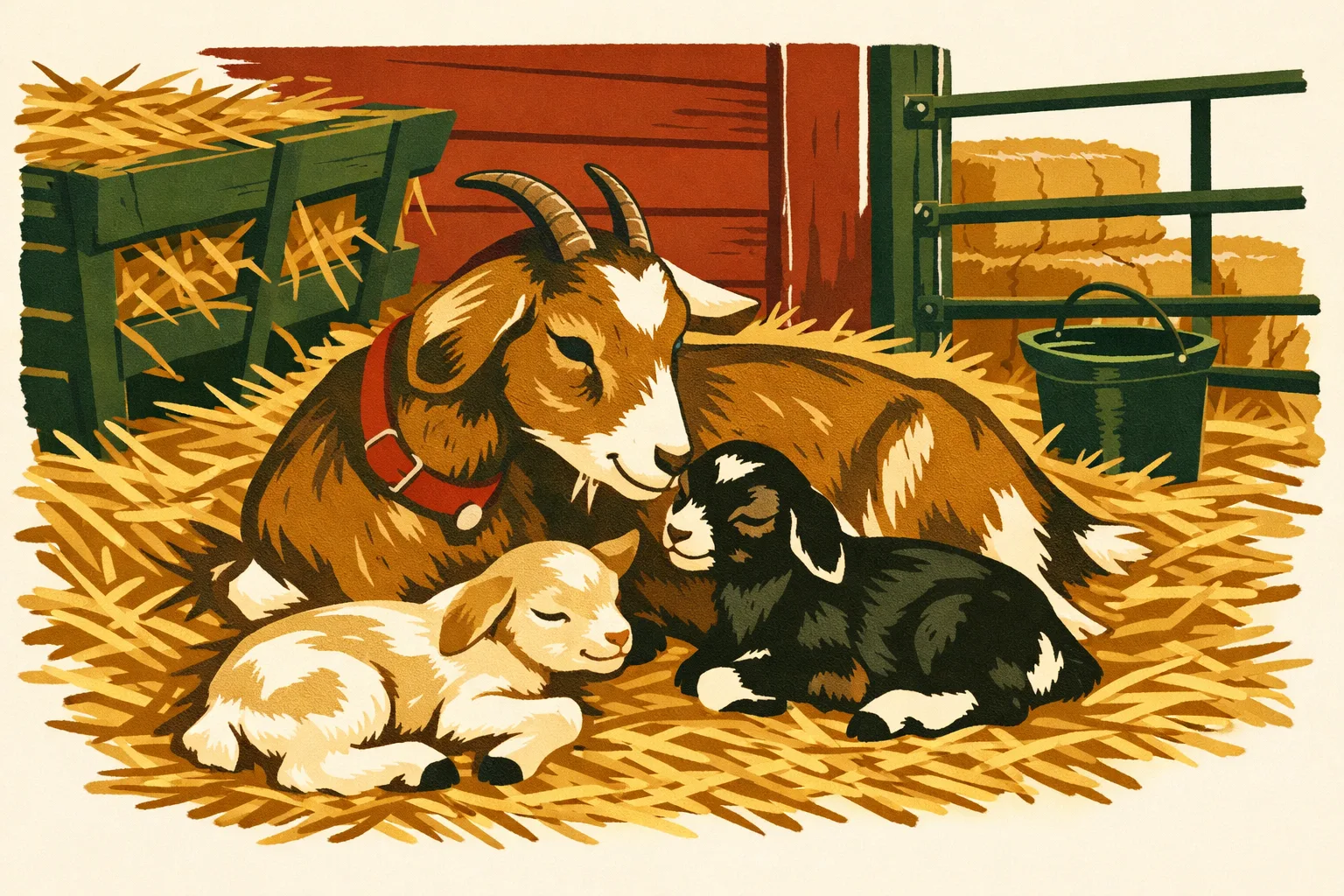
A doe that kids at 2 a.m. does not care whether the mineral order was delayed, the heat lamps are missing bulbs, or the breeding date was written on a feed sack that got thrown away. Kidding season rewards preparation and exposes every weak record, crowded pen, and unclear responsibility on the farm. For commercial goat operations, the difference between a smooth kidding window and a chaotic one is rarely luck—it is a repeatable system built before the first udder bags up.
This guide gives you a practical goat kidding checklist built for working farms: meat goat herds, dairy goat operations, mixed crop-livestock farms, and commercial breeders managing multiple groups of does. The focus is not just supplies. It is timing, facility flow, labor planning, health protocols, and record-keeping that lets you predict kidding dates from breeding dates instead of guessing from body shape.
For more livestock planning resources, see the FarmsFlo crop-livestock category: https://farmsflo.org/category/crop-livestock/
Why Kidding Prep Fails on Commercial Farms
Most kidding problems start weeks before labor. First-time breeders usually prepare for the birth event, but not the management window around it.
On a farm-scale operation, you are not preparing for one cute set of twins. You are preparing for:
- Multiple does freshening across several days or weeks
- Night checks during cold or wet weather
- Colostrum timing
- Kid identification and matching
- Doe health issues after kidding
- Bottle or graft decisions
- Accurate production records
- Future culling and breeding decisions
The kidding barn is where genetics, nutrition, labor, and records all meet. If your records are weak, you will not know which does are due. If your pen setup is weak, you will waste time moving animals under pressure. If your supply list is incomplete, the problem will show up at the worst possible hour.
A useful kidding plan answers four questions:
- Which does are due, and when?
- Where will they kid, recover, and rejoin the herd?
- Who is responsible for checks, interventions, and records?
- What information must be captured before memory fades?
The checklist below is designed to answer those questions before kidding starts.
The Commercial Goat Kidding Timeline
Goat gestation averages about 150 days, with many does kidding within a few days on either side depending on breed, nutrition, litter size, and individual history. For management purposes, plan your kidding window from breeding records, not visual inspection alone.
90 Days Before Expected Kidding
At roughly three months out, you still have time to fix major issues.
Key actions:
- Confirm breeding dates or buck exposure windows
- Separate breeding groups if needed
- Review doe body condition
- Plan feed inventory through lactation
- Check mineral program
- Decide which does need closer observation
- Review vaccination schedule with your veterinarian
- Inspect kidding barn, water systems, lighting, and gates
If you used controlled breeding, your kidding forecast can be precise. If bucks ran with does for a full cycle or longer, build a wider watch window. For example, a buck exposure window of 35 days creates a kidding watch window of roughly the same length.
45 Days Before Expected Kidding
This is when kidding prep becomes operational. Does should be grouped, facilities should be functional, and supplies should be on hand or ordered.
Key actions:
- Move late-gestation does to suitable nutrition groups
- Finalize kidding pen layout
- Repair latches, gates, panels, and feeders
- Check cameras, alarms, or barn lighting
- Clean and bed kidding areas
- Confirm labor assignments
- Review intervention protocols
- Prepare identification supplies
If you manage both crop and livestock enterprises, this is also the point to check scheduling conflicts with planting, spraying, irrigation, or harvest work. For integrated farm planning, browse more resources in farm management.
14 Days Before Expected Kidding
Two weeks out, the goal is readiness, not construction.
Key actions:
- Set up kidding kits
- Stage clean towels, gloves, lubricant, iodine, and kid pullers if used
- Put colostrum plan in writing
- Confirm emergency contact list
- Test heat lamps or warming boxes where appropriate
- Print or sync kidding records
- Move earliest-due does closer to monitoring area
At this stage, no one should be looking for extension cords, batteries, stomach tubes, or marker crayons.
During the Kidding Window
Once kidding begins, you need consistency. Checks should be scheduled, not random.
Common check intervals vary by farm, weather, staffing, and risk level, but many operations increase monitoring during expected heavy kidding days, severe cold, or when first-fresheners are due. Does showing active labor, abnormal discharge, prolonged straining, or signs of distress need prompt attention.
The key is to make your labor plan match your kidding forecast. If you know 30 does are due within five days, staff accordingly. If you only know that “the buck was in sometime last fall,” your labor risk rises sharply.
The 8-Item Goat Kidding Checklist First-Time Breeders Miss
This goat kidding checklist is built around the items that commonly get overlooked until they cost time, kids, or records.
1. Breeding-Date Records That Predict Kidding Dates
The most valuable kidding supply is not in your cabinet. It is the breeding record.
If you do not know when a doe was bred, you cannot accurately plan labor, nutrition changes, close-up groups, or barn space. Guessing from udder development, ligament softness, or belly shape can help near the end, but those signs do not replace a breeding calendar.
What to Record at Breeding
At minimum, capture:
- Doe ID
- Buck ID
- Breeding date
- Breeding method: hand mating, pen breeding, pasture exposure, AI
- Exposure start and end dates if pasture bred
- Breeding group or pasture location
- Notes on repeat heats
- Expected kidding date or window
- Person who observed or entered the record
For controlled hand breeding, calculate the expected kidding date from the service date. For pasture exposure, calculate a range using the first and last possible breeding dates.
Example Kidding Date Planning
If a doe is hand-bred on October 1, estimate kidding around late February using a 150-day planning target. Your watch period should start earlier than the exact due date and extend several days beyond it.
If a buck was turned in with a doe group from October 1 to October 31, your kidding watch window may run from late February through late March. That difference affects labor, pen availability, feed planning, and cash flow.
Why First-Time Breeders Miss This
New breeders often assume they will “remember” breeding dates. That fails quickly once you have multiple does, multiple bucks, repeat heats, and farm work competing for attention.
For commercial herds, breeding records should not live only in notebooks, text messages, or memory. They should be searchable and usable by everyone who needs to check animals.
2. A Real Kidding Pen Plan, Not Just Empty Space
Kidding pens are not just for delivery. They help with bonding, nursing confirmation, observation, and treatment. The right pen plan depends on herd size, breed, weather, and labor availability.
What a Functional Kidding Area Needs
A practical kidding area should include:
- Dry bedding
- Draft protection
- Good ventilation
- Safe panels without kid traps
- Easy water access for does
- Feed access without crowding
- Lighting for night work
- Quick access from the main barn alley
- Space to handle a doe safely
- Ability to clean between uses
For commercial operations, avoid building a system where every small task requires climbing through panels or carrying kids across long distances. Time losses multiply fast during peak kidding.
Pen Capacity Planning
Pen needs depend on kidding rate, how long doe-kid groups stay in bonding pens, and whether does are first-fresheners or experienced.
A practical planning method:
- Estimate the number of does due in the busiest 7-day period.
- Decide average pen stay per doe group.
- Add extra capacity for complications, weak kids, grafting, or weather delays.
- Keep a flexible overflow area ready.
If many does are due together, individual pens may be used only for higher-risk animals while experienced does kid in small groups. The system must fit your labor and facilities.
Common Facility Mistakes
First-time breeders often miss:
- Pens too far from supplies
- Poor lighting
- Frozen or hard-to-reach water
- Gates that cannot be opened with one hand
- Bedding stored in another building
- No place to restrain a doe
- No clean area for tubing or warming kids
- No obvious flow from close-up group to kidding pen to post-kidding group
Good facility flow reduces stress for both animals and workers.
3. Kidding Supplies Packed by Task
A messy cabinet is not a kidding kit. Supplies should be grouped by job so a tired worker can grab the correct container fast.
Core Kidding Kit
Keep these items in a clean, clearly labeled tote:
- Disposable OB gloves
- Short exam gloves
- OB lubricant
- Clean towels
- Kid puller or snare if used and staff are trained
- Bulb syringe or airway clearing tool
- 7% iodine or chlorhexidine navel dip, per veterinary guidance
- Small dipping cup
- Thermometer
- Flashlight or headlamp
- Batteries
- Clean scissors
- Marking pen
- Notebook or mobile record access
- Trash bags
- Paper towels
- Disinfectant wipes
Kid Support Kit
Stage a separate kit for newborn support:
- Colostrum replacer or frozen colostrum plan
- Bottles and nipples
- Feeding tube, if trained to use it
- Scale or sling scale
- Warming box or safe warming setup
- Electrolytes, used according to veterinary direction
- Identification tags, bands, or collars
- Kid coats if needed for weather conditions
Doe Care Kit
Doe-related supplies should be easy to reach:
- Calcium or energy supplements recommended by your veterinarian
- Veterinary-approved medications
- Syringes and needles
- Treatment record sheets or mobile treatment logs
- Halter or headgate access
- Clean bucket
- Post-kidding observation checklist
Do not stock drugs without a veterinary-client-patient relationship and clear instructions. Commercial farms should keep written treatment protocols, withdrawal times where applicable, and staff training records.
Cost and Time Estimate
Approximate startup cost for kidding supplies varies widely by herd size and what you already own. For a small commercial group, basic non-drug supplies may run a few hundred dollars. Larger operations may spend more on panels, cameras, warming equipment, scales, and ID systems.
Time estimate:
- Inventory existing supplies: 1–2 hours
- Order missing supplies: 30–60 minutes
- Assemble and label kits: 1–2 hours
- Staff walkthrough: 30–45 minutes
The labor cost of preparation is small compared with searching for equipment during a difficult birth.
4. A Colostrum Plan Before the First Kid Hits the Ground
Colostrum management is one of the highest-leverage tasks in kidding season. Newborn kids need timely access to clean, adequate colostrum. If they cannot nurse, staff need a backup plan immediately.
What Your Colostrum Plan Should Cover
Write down:
- How to confirm a kid has nursed
- When to intervene if nursing is not observed
- How to milk a doe for colostrum
- Where frozen colostrum is stored
- How to thaw colostrum safely
- When to use colostrum replacer
- Who is trained to bottle feed
- Who is trained to tube feed
- How feeding is recorded
First-time breeders often assume kids will nurse because most do. On farm-scale operations, “most” is not a protocol. Cold weather, weak kids, mastitis, mismothering, triplets, and first-fresheners can all disrupt intake.
Practical Nursing Confirmation
A kid with a full belly, dry coat, active movement, and normal posture is more reassuring than a kid that simply appears near the udder. Watch for actual latch and swallowing when possible.
Record:
- Time born
- Time first nursed or fed
- Source of colostrum
- Amount fed if bottle or tube
- Staff initials
Those records matter if a kid becomes weak later. They also reveal doe lines with poor maternal behavior or low colostrum availability.
5. Labor Assignments for Day Checks, Night Checks, and Emergencies
Kidding season fails when everyone assumes someone else is checking the barn.
Commercial farms need written assignments, especially when kidding overlaps with fieldwork, feeding routes, equipment repairs, or off-farm hauling.
Build a Kidding Labor Schedule
Your schedule should define:
- Who checks close-up does
- Check times
- What signs trigger a call
- Who has authority to intervene
- Who calls the veterinarian
- Who records births
- Who handles feeding and bedding
- Who checks water and heat equipment
- Who covers days off
Put the schedule where staff can see it and keep a digital version accessible.
Labor Time Estimates
Actual time depends on herd size, weather, and facility layout. Planning estimates:
- Routine barn check: 10–30 minutes per group
- Assisted delivery: 20–90+ minutes depending on case
- Processing healthy kids: 5–15 minutes per kid
- Moving doe-kid group: 5–20 minutes
- Cleaning and rebedding pen: 10–25 minutes
- Detailed record entry: 2–5 minutes per doe-kid event if system is ready
Poor layout doubles these times. Poor records make them worse.
Emergency Decision Rules
Staff should know when to escalate. Build rules around observable signs, such as:
- Doe straining hard with no progress
- Abnormal presentation visible
- Foul-smelling discharge
- Doe down or severely weak
- Kid born not breathing normally
- Kid cold, limp, or unable to suck
- Heavy bleeding
- Suspected uterine prolapse
- Retained placenta beyond your veterinary protocol
Your veterinarian should help define intervention thresholds and medication protocols for your herd.
6. Identification That Links Kids to Does Immediately
Kid identification cannot wait until later when multiple does kid close together. Mismatched records create long-term problems in breeding, health, and sales.
ID Options for Commercial Goat Operations
Common systems include:
- Ear tags
- Electronic ID tags
- Temporary neckbands
- Paint marks
- Tattooing, depending on registry or sale requirements
- Pen cards linked to doe ID
Many farms use temporary ID at birth followed by permanent ID after the kid is stable.
What to Capture at Birth
Record:
- Doe ID
- Kid ID
- Birth date and time
- Sex
- Birth type: single, twin, triplet, etc.
- Birth weight if collected
- Assistance level
- Vigor score or health note
- Nursing confirmation
- Dam behavior
- Sire ID or breeding group
- Any defects, injuries, or treatments
If you sell breeding stock, birth records support customer confidence. If you sell market animals, they still help identify productive dams and manage health.
Avoiding ID Mistakes
Use a two-step process:
- Temporary match at birth: mark or band kids before moving groups.
- Permanent record entry: assign official ID and confirm dam before animals leave the kidding area.
Do not rely on memory after chores. A busy kidding day can include several sets of twins and triplets. Record before moving to the next task.
7. Post-Kidding Doe Checks, Not Just Kid Checks
Many first-time breeders focus heavily on kids and miss doe recovery. A productive doe that crashes after kidding can cost more than one weak kid.
What to Check After Kidding
Observe the doe for:
- Alertness and appetite
- Ability to stand and move normally
- Udder fill and teat function
- Evidence both sides of udder are being nursed
- Excessive bleeding
- Discharge that appears abnormal
- Signs of pain or weakness
- Water intake
- Feed intake
- Maternal behavior
- Placenta status under your vet’s guidance
High-producing dairy does, thin does, over-conditioned does, and does carrying multiples may need closer monitoring based on your herd history and veterinary plan.
Post-Kidding Nutrition
After kidding, lactation demand rises. Make sure ration changes are planned rather than improvised.
Work with your nutritionist or veterinarian to review:
- Forage quality
- Grain or concentrate levels
- Mineral access
- Water availability
- Body condition targets
- Feed bunk space
- Sorting pressure from dominant does
A doe that cannot access feed or water will not perform. Crowding after kidding can lead to mismothering, poor kid growth, and uneven doe recovery.
Record Post-Kidding Issues
Track:
- Assisted births
- Retained placenta cases
- Mastitis
- Poor mothering
- Low milk
- Doe illness
- Kid rejection
- Repeat problems by doe family
These records should feed directly into culling and replacement decisions. A doe that raises twins unassisted every year is not the same asset as a doe that repeatedly needs help, even if both appear healthy at weaning.
8. A Record-Keeping System That Turns Kidding Into Management Data
Kidding records should not end at “doe had twins.” The real value comes later when you decide which does to retain, sell, cull, or rebreed.
A good record system makes kidding data usable for:
- Breeding performance
- Kid survival
- Weaning weights
- Doe productivity
- Sire comparisons
- Labor planning
- Health trends
- Replacement selection
- Customer documentation
- Veterinary review
What First-Time Breeders Usually Miss
They collect some notes during kidding but do not structure them. Later, they cannot answer basic questions:
- Which buck sired the strongest kid crop?
- Which does required assistance?
- Which does lost kids?
- Which first-fresheners raised twins?
- Which does had udder problems?
- Which breeding group kidded earlier or later than expected?
- Which families should be retained?
If the record cannot support a decision, it is not doing enough work.
Kidding Record Fields to Use
Use consistent fields such as:
- Doe ID
- Breed or type
- Age/parity
- Buck ID
- Breeding date
- Expected kidding date
- Actual kidding date
- Days from breeding to kidding
- Number born
- Number alive at birth
- Number weaned
- Kid IDs
- Sex of kids
- Birth weights
- Assistance level
- Colostrum status
- Doe health notes
- Kid treatments
- Weaning weight
- Culling recommendation
Not every farm weighs every kid at birth, but every farm should capture enough information to make production decisions.
Comparison Table: Paper, Spreadsheet, or Farm Management Software
Choosing a record system depends on herd size, staff, and how much you need the data later. The table below compares common options for kidding season.
| Record System | Strengths | Weaknesses | Fit for Commercial Kidding |
|---|---|---|---|
| Paper notebook or barn sheet | Fast to start, low cost, works without internet | Easy to lose, hard to search, poor for forecasting, duplicate entry often needed | Useful as backup or temporary capture, weak as the main system for larger herds |
| Spreadsheet | Flexible, low cost, searchable if maintained well | Version control issues, manual date calculations, harder for multiple users in the barn | Works for smaller commercial herds with disciplined entry, can become fragile during busy seasons |
| Farm management software | Centralized records, better mobile access, breeding-to-kidding date prediction, easier reporting | Requires setup and staff adoption | Strong fit for operations that need forecasts, task tracking, and history by animal |
A hybrid system can work: quick barn capture plus digital entry the same day. The risk is delay. If data waits until the end of the week, accuracy drops.
Practical Goat Kidding Checklist for Farm-Scale Operations
Use this action list before the kidding window opens. Assign names and dates to each item.
Breeding and Due-Date Forecast
- Enter doe ID, buck ID, and breeding date for every exposed doe
- Calculate expected kidding date or kidding window
- Flag first-fresheners, older does, thin does, and prior problem does
- Build a weekly kidding forecast
- Share the forecast with all workers involved
Facilities
- Clean and bed kidding pens
- Test gates, latches, lights, outlets, and cameras
- Confirm water access and freeze protection
- Stage panels for overflow pens
- Set up a warming area if needed
- Store bedding close to the kidding area
- Prepare a sick or weak-kid area
Supplies
- Inventory kidding kit
- Restock gloves, lubricant, towels, iodine or navel dip, and disinfectant
- Prepare bottles, nipples, feeding tube, and colostrum supplies
- Check batteries, headlamps, and extension cords
- Stage ID tags, tagger, marker, and record sheets
- Confirm medications and protocols with veterinarian
- Post emergency numbers
Labor
- Assign day checks
- Assign night checks where needed
- Define signs that require immediate help
- Train staff on record entry
- Review colostrum protocol
- Review safe handling and assisted-birth protocol with qualified personnel
- Schedule backup coverage
Records
- Prepare birth record form or digital template
- Confirm each worker knows required fields
- Link kid ID to doe ID before moving animals
- Record nursing or colostrum feeding
- Enter treatments the same day
- Review kidding results weekly during the season
Kidding Season Cost Planning
Kidding costs vary by climate, herd size, barn condition, and management style. Still, every operation should budget for the categories below.
Facility Costs
Potential expenses:
- Temporary panels or gates
- Bedding
- Lighting
- Heat equipment or warming boxes
- Water system repairs
- Cameras or monitors
- Alleyway improvements
If facilities are already functional, costs may be limited to bedding and repairs. If you need to convert a shed or build kidding pens, costs rise quickly. Start facility planning months ahead so repairs do not collide with kidding labor.
Supply Costs
Budget for:
- OB supplies
- Navel care
- Towels and sanitation
- ID supplies
- Bottles and nipples
- Colostrum replacer or storage supplies
- Thermometers
- Record materials
- Veterinary supplies under approved protocols
Do not wait until the first doe is in labor to discover that the tagger is broken or the colostrum replacer expired.
Labor Costs
Labor is often the largest hidden cost. Kidding season can add:
- Extra observation time
- Night checks
- Pen cleaning
- Bottle feeding
- Data entry
- Treatment time
- Extra feeding and bedding runs
Forecasting due dates helps contain labor cost. If you know the heavy kidding weeks, you can schedule help only when needed instead of running extended checks for an unnecessarily long window.
Common Kidding Problems and What to Prepare For
Preparation does not eliminate problems, but it improves response time.
Weak or Cold Kids
Cold stress can develop quickly, especially in wet, windy, or freezing conditions. Prepare:
- Dry towels
- Warming area
- Thermometer
- Colostrum access
- Staff training on when to warm before feeding
- Clear veterinary guidance
Do not assume a weak kid just needs time. Weak kids often need fast assessment.
Mismothering
Mismothering is more likely with first-fresheners, crowded pens, poor weather, or multiple does kidding in one area.
Prepare:
- Bonding pens
- Temporary kid ID
- Doe-kid matching records
- Observation schedule
- Grafting plan if needed
Difficult Births
Dystocia requires trained assessment. Prepare:
- Clean gloves
- Lubricant
- Restraint option
- Veterinary phone number
- Decision threshold for calling help
Only trained people should attempt internal corrections. Poor handling can injure the doe and kids.
Udder or Nursing Problems
Prepare to check:
- Teat plugs
- Uneven udder fill
- Mastitis signs
- Kids nursing both sides
- Doe tolerance of nursing
Record udder problems. They affect replacement decisions.
Turning Kidding Records Into Better Breeding Decisions
Kidding season data is only valuable if you use it. After the season, schedule a review before memories fade and before replacement decisions are final.
Review by Doe
Rank does by:
- Number born
- Number raised
- Assistance required
- Kid vigor
- Mothering behavior
- Udder function
- Weaning performance
- Health issues
- Consistency across years
A doe that needs repeated intervention should be evaluated hard, even if she produces attractive kids.
Review by Buck
If sire records are accurate, review:
- Conception timing
- Kidding ease
- Kid vigor
- Birth weights if collected
- Growth to weaning
- Structural soundness
- Replacement quality
Without sire data, you cannot confidently improve the herd through breeding choices.
Review by Labor and Facility Flow
Ask the crew:
- Which pens worked?
- Where did we waste time?
- Which supplies ran short?
- Which records were hard to capture?
- Which checks were missed or duplicated?
- Which does needed closer pre-kidding monitoring?
Make repairs and process changes soon after kidding season, not right before the next one.
For more operational planning articles, visit farmsflo.org/category/operations and farmsflo.org/category/crop-livestock.
Farm-Scale Kidding Prep Action Plan
Use this schedule if your kidding season is approaching and you need a clear path.
This Week
- Pull all breeding records
- Calculate expected kidding dates
- Identify the first 20% of does due
- Inventory supplies
- Walk the kidding facility with your crew
- Order missing supplies
- Confirm veterinary protocols
Estimated time: 3–6 hours, depending on record quality and facility condition.
Two to Four Weeks Before Kidding
- Set up pens
- Deep bed close-up area
- Prepare overflow space
- Assign check schedule
- Train staff on records and colostrum protocol
- Test lighting, cameras, water, and warming equipment
- Print or sync doe lists by expected due date
Estimated time: 1–2 workdays for a small commercial herd; more if repairs are needed.
First Week of Kidding
- Review due list daily
- Record every birth immediately
- Confirm kid ID before moving pairs
- Track colostrum intake
- Monitor doe recovery
- Update treatment records
- Hold a short crew review after the first several births
Estimated time: variable, but plan for longer checks until staff and animals settle into the system.
After Peak Kidding
- Clean and reset pens
- Reconcile paper notes with digital records
- Review problem cases
- Flag cull candidates
- Update kid inventory
- Schedule weaning and marketing tasks
Estimated time: 2–4 hours for records review, plus facility cleanup.
How FarmsFlo Helps
FarmsFlo helps commercial goat producers turn breeding records into a working kidding plan. Instead of estimating due dates from memory or scattered notes, you can record breeding dates, connect does to bucks, and use those dates to predict kidding windows.
With FarmsFlo, your team can:
- Track doe and buck breeding records
- Forecast expected kidding dates from breeding dates
- Build kidding lists by week or group
- Record births, kid IDs, and dam information
- Keep treatment and health notes tied to the animal
- Reduce missed checks caused by unclear due dates
- Make better culling and replacement decisions after the season
A strong goat kidding checklist starts with accurate dates and ends with records you can use next year. FarmsFlo gives your farm one place to manage that information across the herd.
After the 8-item checklist, keep kidding dates, lineage, and health together. → See also: goat herd records for kidding dates, lineage, and health in one place.
Start organizing your kidding season before the first doe goes into labor. Try FarmsFlo at farmsflo.com and set up your breeding-to-kidding records for the season ahead.