Crop Planning Software vs. Spreadsheets: What 500-Acre Farms Are Actually Using
Crop planning software vs spreadsheets — a practical comparison for commercial farms. Features to look for, ROI, and what 500-acre operations actually use.
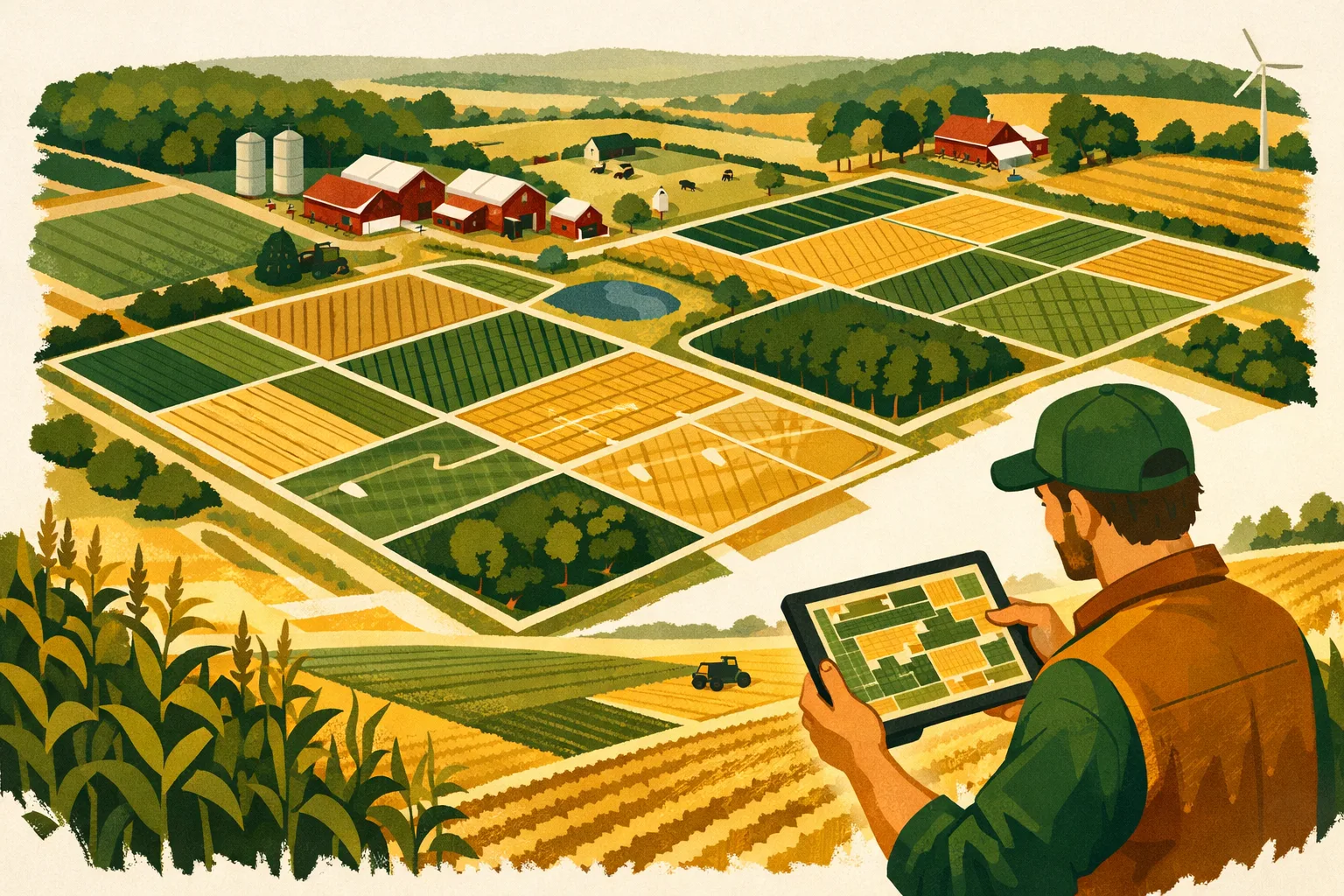
Navigating the Complexities of Crop Planning
For the modern farm operator, efficiently managing a 500-acre farm requires more than just traditional know-how. The agricultural landscape is increasingly digital, and crop planning software has emerged as a pivotal tool, potentially replacing the spreadsheet as the go-to solution for crop management. But is this transition truly beneficial, or are spreadsheets still holding their own in the realm of farm management?
In this guide, we delve into the practicalities of using crop planning software versus spreadsheets. We’ll explore what 500-acre farms are actually using, provide a comprehensive ROI analysis, and list the essential features of effective crop planning software. By the end, you’ll have a clear understanding of which approach might best suit your operation.
Why Crop Planning Matters
The Complexity of Modern Farming
Today’s farming involves intricate planning and forecasting to ensure profitability and sustainability. Crop planning encompasses everything from choosing the right crops, scheduling planting and harvesting, managing inputs, and tracking yields. As farm operations increase in scale, so do the challenges associated with these tasks.
Spreadsheet Limitations
While spreadsheets are powerful tools, they have inherent limitations when scaled to the complexities of modern farm operations. Manually inputting data, errors in formulae, and the inability to easily integrate with external data sources are common challenges.
Crop Planning Software: A Game Changer?
Advantages of Digital Tools
1. Automation and Integration
Modern crop planning software automates many processes, reducing the time and labor required for data entry. These tools can integrate with other digital systems, including weather forecasts and market prices, providing a more comprehensive view of farm operations.
2. Real-Time Data and Analytics
Crop planning software provides real-time analytics, allowing for more accurate decision-making. This can lead to optimized resource allocation and improved yield forecasts.
3. Scalability
As farms grow, so do their data management needs. Software solutions can handle large datasets more efficiently than spreadsheets, offering scalability that Excel simply can’t match.
4. Error Reduction
Built-in error checks and validation features help reduce the risk of data-related errors that are common in manual spreadsheets.
Cost-Benefit Analysis: Software vs. Spreadsheets
Initial and Ongoing Costs
Spreadsheets:
- Initial Cost: Low to none, assuming existing access to software like Microsoft Excel.
- Ongoing Cost: Minimal, but consider the labor cost of manual data entry and error correction.
Crop Planning Software:
- Initial Cost: Varies widely; often involves a subscription or one-time licensing fee.
- Ongoing Cost: Subscription fees, potential training costs, but offset by time saved and improved decision-making.
Return on Investment (ROI)
Spreadsheets:
- Pros: Low initial cost; familiar interface.
- Cons: Time-intensive; higher potential for costly errors.
Crop Planning Software:
- Pros: Saves time, reduces errors, integrates data, and provides analytics.
- Cons: Higher upfront cost; requires training.
ROI Consideration: Farms that adopt comprehensive crop planning software often see improved efficiency and profitability, making the higher initial investment worthwhile. Consider the specific needs and scale of your farm when evaluating ROI.
Feature Checklist for Effective Crop Planning Software
-
Data Integration Capabilities
- Can the software integrate with external sources such as weather data or market prices?
-
User-Friendly Interface
- Is the software intuitive and easy to use for all team members?
-
Customizable Reporting
- Does it offer customizable reports to fit the specific needs of your operation?
-
Scalability
- Can it handle the growth of your farm in terms of data volume and complexity?
-
Security and Data Backup
- Are there robust security measures and backup options to protect your data?
-
Mobile Access
- Is there a mobile version or app to allow access in the field?
-
Customer Support and Training
- Is there reliable customer support and training available to help you and your team get up to speed?
Comparative Analysis: Software vs. Spreadsheets
| Feature | Spreadsheets | Crop Planning Software |
|---|---|---|
| Data Integration | Limited | Extensive |
| Real-Time Analytics | No | Yes |
| Error Reduction | Manual | Automated |
| Scalability | Limited | High |
| Upfront Cost | Low | Medium to High |
| Ongoing Cost | Low | Medium |
| User Interface | Familiar but Complex | User-Friendly |
| Accessibility | Desktop-only | Mobile and Desktop |
Action Plan for Transitioning to Crop Planning Software
-
Evaluate Your Needs
- Assess the specific needs of your operation. What are the pain points with your current system?
-
Research Software Options
- Compare different crop planning software solutions. Look for those that align with your farm’s scale and complexity.
-
Consider Costs and ROI
- Develop a budget and calculate the potential ROI of switching to a software solution.
-
Trial and Training
- Take advantage of free trials. Ensure that training is available for you and your team to maximize the software’s potential.
-
Implement Gradually
- Start with a pilot program on a section of your farm to test the software’s capabilities and ease of integration.
-
Gather Feedback and Adjust
- After initial implementation, gather feedback from your team and make necessary adjustments to increase efficiency and satisfaction.
How FarmsFlo Helps
Transitioning to crop planning software can transform your farm operation, making it more efficient and profitable. FarmsFlo offers a comprehensive suite of tools tailored to the needs of modern farms. Our crop planning software integrates seamlessly with other farm management systems, providing real-time analytics and insights to optimize your operations.
By choosing FarmsFlo, you gain access to industry-leading features and dedicated support, ensuring your farm can thrive in today’s competitive agricultural landscape. Try FarmsFlo today and see how our solutions can revolutionize your farm management. Visit farmsflo.com for a free trial and further information.
Explore more about crop-livestock integration and other farming solutions in our crop-livestock category.