Chicken Feed Cost Per Dozen Eggs in 2026: The Number Few Flock Owners Track
How to figure your chicken feed cost per dozen eggs in 2026 — the number that tells you if the flock pays.
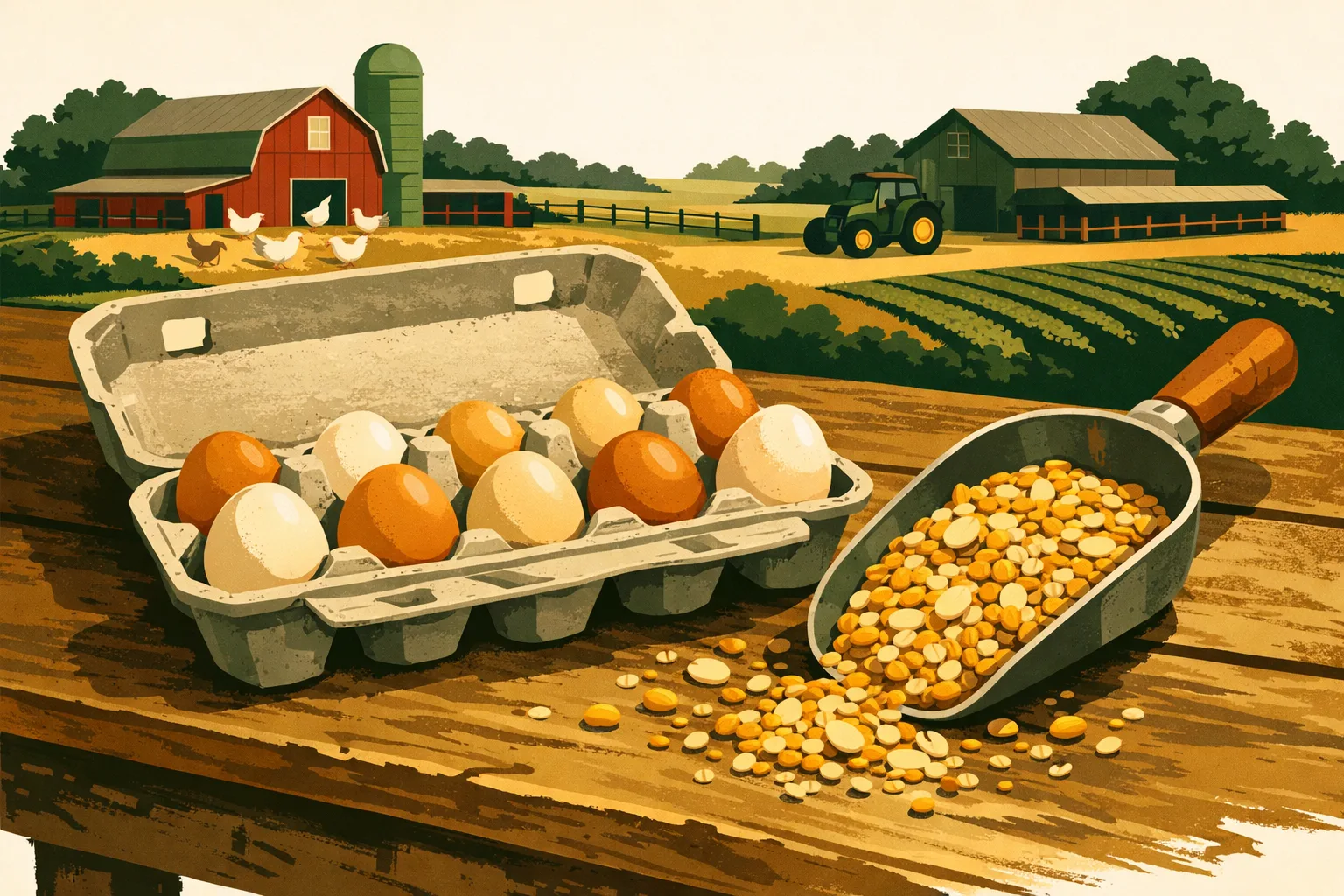
Understanding Chicken Feed Cost: A Key Metric for Modern Poultry Operations
In the intricate world of poultry farming, one metric often overlooked by many flock owners is the chicken feed cost per dozen eggs. Yet, this figure is crucial for optimizing your farm’s profitability. With rising feed prices and fluctuating egg markets, understanding and managing this cost can be the difference between a sustainable operation and a financial struggle.
Calculating Chicken Feed Cost Per Dozen Eggs
Why Track Feed Costs?
Feed costs typically account for 60-70% of total poultry production expenses. By accurately calculating feed costs per dozen eggs, farmers can pinpoint inefficiencies and make informed decisions about feed choices and flock management.
Step-by-Step Guide to Calculation
-
Determine Total Feed Cost: Begin by calculating the total cost of feed consumed by your flock over a specific period. This includes all purchased feed, whether in bulk or smaller quantities.
-
Measure Egg Production: Record the total number of eggs produced by your flock during the same period. Ensure your records are precise to avoid skewed data.
-
Calculate Feed Cost Per Egg: Divide the total feed cost by the number of eggs produced to get the feed cost per egg.
-
Convert to Cost Per Dozen: Multiply the feed cost per egg by 12 to determine the feed cost per dozen eggs.
Example
Assume your flock consumed $1,200 worth of feed in a month and produced 24,000 eggs. The calculation would be:
- Feed Cost Per Egg: $1,200 / 24,000 = $0.05 per egg
- Feed Cost Per Dozen: $0.05 * 12 = $0.60 per dozen eggs
Comparison Table: Feed Cost Impacts
| Feed Cost Per Dozen Eggs | Profit Margin with $2 Dozen Sale | Profit Margin with $3 Dozen Sale |
|---|---|---|
| $0.60 | $1.40 | $2.40 |
| $0.80 | $1.20 | $2.20 |
| $1.00 | $1.00 | $2.00 |
Factors Affecting Feed Cost
Seasonal Swings
Feed costs can fluctuate dramatically due to seasonal availability of grains and other feed components. In summer, when grain supplies can be higher, prices may drop. Conversely, winter often sees an increase due to reduced availability and higher demand.
Geographic Variations
Feed prices can vary based on location due to differences in transportation costs and local agricultural practices. Farms closer to feed production centers may enjoy lower costs compared to those further away.
Feed Composition
The nutritional composition of the feed directly affects cost. High-protein diets, although more expensive, may increase egg production efficiency, potentially lowering the overall cost per dozen eggs.
Practical Checklist for Managing Feed Costs
- Regularly Monitor Feed Prices: Stay informed about current market prices and trends.
- Optimize Flock Size: Ensure your flock size matches your production goals and feed budget.
- Evaluate Feed Suppliers: Compare prices and quality from different suppliers to ensure the best deal.
- Implement Efficient Feeding Practices: Minimize waste by using feeders that prevent spillage and spoilage.
- Track Egg Production Rigorously: Use precise record-keeping to adjust feed use and manage costs effectively.
How FarmsFlo Helps
FarmsFlo offers cutting-edge farm management software that automatically tracks your feed costs, egg production, and profitability metrics. By integrating real-time data from your operations, FarmsFlo provides actionable insights to optimize feed usage and reduce costs per dozen eggs.
Try FarmsFlo for free at farmsflo.com and take control of your farm’s profitability today. With our comprehensive tools, you can manage your feed costs and maximize your returns with ease.