7 Agricultural Business Management Tactics That Actually Boost Farm Efficiency
Explore 7 proven tactics to enhance agricultural business management and drive farm success.
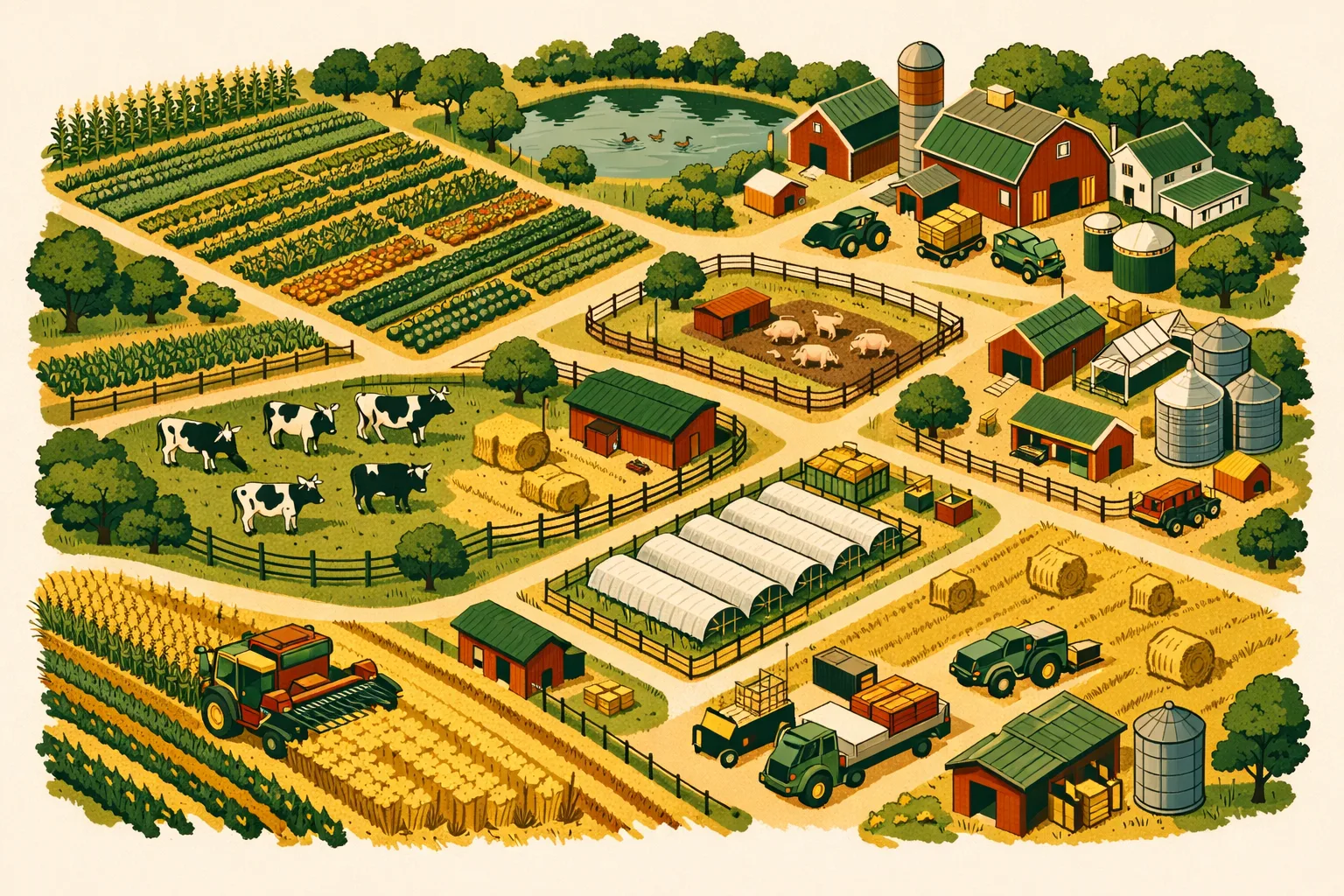
A farm can have excellent soils, skilled operators, reliable equipment, and strong yields—and still leak profit through late decisions, unclear labor priorities, preventable downtime, poor records, and slow communication. The farms that will be easier to run by 2026 are not necessarily the ones buying the newest machinery first. They are the ones tightening how decisions are made, tracked, communicated, and improved across the whole operation.
Agricultural business management is the operating system behind a commercial farm. It connects agronomy, labor, machinery, finance, marketing, compliance, and field execution into one coordinated plan. For 50- to 5,000+ acre farms, even small management improvements can reduce wasted passes, shorten turnaround time, improve input timing, and give managers a clearer view of what is actually happening across the business.
Below are seven practical tactics farm operators can implement now to improve efficiency and productivity heading into 2026.
1. Build a Field-Level Operating Plan Before the Season Starts
A seasonal plan that lives only in the owner’s head creates bottlenecks. Fieldwork slows down when operators have to ask what rate to apply, which field is next, where the seed is staged, or whether a weather window changes the priority list.
A field-level operating plan turns strategy into executable work. It should define the “what, when, where, who, and how” for each major production phase.
What to Include in the Plan
For each field or management zone, document:
- Crop and variety or hybrid
- Planned tillage or residue management
- Fertility program and application timing
- Seed population or seeding rate
- Herbicide, fungicide, and insecticide strategy
- Irrigation schedule or trigger points, if applicable
- Field access notes, hazards, gates, and traffic patterns
- Equipment needed for each operation
- Labor assignments by role
- Contingency plans for weather delays
For farms with multiple crops, landlords, irrigation blocks, or custom work commitments, the plan should also include priority rules. For example: irrigated corn planting may take priority over dryland soybeans if soil temperature and moisture targets are met, while hay cutting may move ahead of spraying if a narrow weather window opens.
Time and Cost Estimate
A practical pre-season planning process usually requires:
| Farm Size | Planning Time | Typical Direct Cost | Best Use of Time |
|---|---|---|---|
| 50–300 acres | 4–10 hours | Low to moderate | Field-by-field crop and input planning |
| 300–1,500 acres | 10–30 hours | Moderate | Labor, equipment, and input sequencing |
| 1,500–5,000+ acres | 30–80 hours | Moderate to high | Multi-enterprise scheduling, logistics, and risk planning |
Direct costs may include manager time, agronomist meetings, mapping tools, software, or consulting support. The main return comes from fewer delays, clearer task handoffs, and better input timing.
Management Move for 2026
Move from “seasonal intentions” to written operating plans that can be updated in real time. If your plan cannot be shared with a sprayer operator, hired hand, crop consultant, or office manager, it is not yet operational.
For more practical farm planning content, review the FarmsFlo operations category.
2. Standardize Workflows for Recurring Farm Tasks
Every commercial farm has repeatable work: loading sprayers, calibrating planters, moving irrigation pipe, servicing tractors, recording loads, checking bins, scouting fields, and closing out spray records. When these tasks are performed differently by each person, quality and speed vary.
Standard operating procedures are not just for large corporations. On a farm, they reduce rework and make it easier to train seasonal employees, family members, and equipment operators.
Start With High-Risk, High-Frequency Tasks
Do not try to document everything in one week. Start with tasks that are repeated often, involve safety risks, affect crop performance, or create compliance exposure.
Good first workflows include:
- Pre-plant equipment inspection
- Planter or drill setup
- Sprayer loading and cleanout
- Chemical application documentation
- Grain cart and truck communication
- Irrigation system startup and shutdown
- Equipment fueling and end-of-day parking
- Grain bin monitoring
- Livestock feeding or treatment protocols, where relevant
- End-of-day field progress reporting
What a Farm Workflow Should Look Like
A useful workflow should be short enough to follow under pressure. One page is often better than a detailed manual no one reads.
Each workflow should include:
- Task name
- Responsible role
- Required tools, inputs, or equipment
- Safety requirements
- Step-by-step process
- Quality check
- Recordkeeping requirement
- Escalation rule if something goes wrong
Example: a sprayer loading workflow should include product order, water volume, agitation requirements, PPE, label check, field confirmation, wind check, tank mix record, and cleanout instructions.
Cost and Time Estimate
Expect to spend:
- 30–90 minutes documenting one simple workflow
- 2–4 hours documenting a complex workflow
- 15–30 minutes training each employee on a new workflow
- Minimal direct cost if using shared documents or farm management software
The biggest cost is management attention. The payoff is faster onboarding, fewer missed steps, and more consistent execution.
Practical Tip
Use photos. A picture of the correct valve position, seed tender setup, chemical tote label, or bin fan switch can prevent mistakes far better than a paragraph of instructions.
3. Track Labor, Equipment, and Field Time Against Real Jobs
Many farms know their total fuel bill, payroll cost, and repair expense. Fewer know which fields, crops, or jobs consume the most time and resources. That gap makes it hard to improve efficiency.
Agricultural business management becomes much more powerful when time and costs are tied to specific activities. Instead of only asking, “How much did we spend?” you can ask, “Which operations are taking too long, costing too much, or creating bottlenecks?”
What to Track
Start with three categories:
Labor Time
Track hours by:
- Employee or operator
- Field or location
- Task type
- Equipment used
- Date and time window
- Notes on delays or issues
Equipment Time
Track:
- Engine hours or acres covered
- Downtime
- Repair events
- Fuel usage where practical
- Idle time if telematics are available
- Attachment or implement used
Field Operations
Track:
- Acres completed
- Input rates
- Weather conditions
- Soil conditions
- Application or planting timing
- Completion status
- Issues requiring follow-up
You do not need perfect data to start. A consistent basic record is better than an overly complex system that fails after two weeks.
How This Improves Efficiency
Once you tie labor and equipment to jobs, you can identify patterns:
- A certain field always takes longer due to access or layout
- One planter setup creates more downtime than expected
- Sprayer refill logistics are limiting acres per day
- Harvest trucking capacity is the bottleneck, not combine capacity
- One employee consistently completes maintenance checks more thoroughly
- Repair costs are concentrated in a machine that should be replaced or reassigned
These insights support better decisions on equipment purchases, labor scheduling, custom hire, field consolidation, lease negotiations, and crop planning.
Time and Cost Estimate
For a 500- to 2,000-acre operation, expect:
- 5–10 minutes per operator per day for basic time reporting
- 15–30 minutes per day for a manager to review and correct entries during peak season
- 2–6 hours after each major season to analyze the data
- Software cost varies depending on platform and features, but the management time is usually the larger investment
Management Move for 2026
Make job-level tracking a routine part of daily operations. By 2026, your farm should be able to compare planned versus actual time for major work windows: planting, spraying, sidedressing, irrigation, harvest, hauling, and maintenance.
4. Use a Weekly Management Rhythm Instead of Constant Firefighting
A farm manager’s day can get consumed by urgent calls, broken parts, weather changes, supplier updates, employee questions, and market decisions. Without a management rhythm, the urgent pushes out the strategic.
A weekly rhythm creates structured decision points. It helps the farm team align priorities before the week gets away from them.
The Weekly Farm Management Meeting
This does not need to be long. A 30- to 60-minute meeting can prevent days of confusion.
For commercial farms, include the people responsible for:
- Field operations
- Equipment and maintenance
- Labor scheduling
- Agronomy or crop decisions
- Purchasing and inventory
- Office records or compliance
- Livestock or irrigation, if applicable
If the farm is family-run, this meeting still matters. Family communication can be efficient, but assumptions create risk during peak season.
Recommended Weekly Agenda
Use the same agenda every week:
- Weather outlook and field conditions
- Work completed last week
- Work planned this week
- Labor availability
- Equipment status and repair needs
- Input inventory and delivery needs
- Safety concerns
- Financial or marketing decisions due
- Landlord, customer, or vendor follow-up
- Decisions and task assignments
End every meeting with named owners and deadlines. “We need to check the tender trailer” is vague. “Josh checks the tender trailer tires and pump by Tuesday noon” is actionable.
Daily Huddles During Peak Season
During planting, spraying, irrigation, hay harvest, silage, or grain harvest, use a short daily huddle.
Keep it to 10–15 minutes:
- What is the top priority today?
- Who is running each machine?
- What fields are in or out due to conditions?
- What inputs or parts are needed?
- What safety risks are present?
- What changed since yesterday?
This is especially valuable on farms with multiple crews or rented ground spread across several locations.
Cost and Time Estimate
Weekly rhythm cost:
- 30–60 minutes per week for managers
- 10–15 minutes daily during peak season
- Minimal direct cost
- High return in reduced confusion and faster decisions
The discipline is the hard part. Put the meeting on the calendar and protect it.
5. Manage Inputs Like Working Capital, Not Just Supplies
Seed, fertilizer, crop protection products, fuel, feed, parts, and packaging materials represent major cash commitments. Poor inventory control ties up working capital, causes emergency purchases, and increases the chance of running short during critical windows.
Input management is a core agricultural business management function. It connects agronomy, finance, logistics, storage, and purchasing.
Build an Input Inventory System
At minimum, track:
- Product name
- Quantity on hand
- Unit of measure
- Storage location
- Lot number or batch number where relevant
- Purchase date
- Supplier
- Cost per unit
- Fields or enterprises assigned
- Expiration, use restrictions, or label concerns
- Reorder trigger
This can start in a spreadsheet, but larger farms usually benefit from shared digital records that multiple people can update.
Avoid the Two Common Inventory Problems
Problem 1: Overbuying
Overbuying ties up cash and creates storage risk. It can also leave the farm with obsolete products if crop plans, labels, herbicide programs, or pest pressure change.
Problem 2: Underbuying
Underbuying can delay fieldwork or force higher-cost emergency purchases. During peak season, the cost of not having the right product available may exceed the price difference between suppliers.
Input Management Tactics That Work
Use these practices:
- Assign one person to own inventory accuracy
- Count high-value products weekly during peak season
- Reconcile planned use against actual use
- Stage products by field or work order when practical
- Use reorder points for fuel, chemical, feed, and parts
- Keep safety data sheets and labels accessible
- Separate partial containers and clearly mark them
- Track returned, transferred, or damaged product
- Review unused inventory before placing next season’s orders
Comparison Table: Informal vs. Managed Input Control
| Area | Informal Input Management | Managed Input Control |
|---|---|---|
| Product counts | Based on memory or visual checks | Recorded and updated regularly |
| Purchasing | Reactive or deal-driven | Based on crop plan, cash flow, and timing |
| Storage | Product placed where space exists | Organized by product type, safety needs, and use timing |
| Field allocation | Decided during application | Assigned before fieldwork begins |
| Recordkeeping | Updated after the fact | Updated as products are received and used |
| Risk | Shortages, overstock, compliance gaps | Better timing, clearer costs, fewer surprises |
| Manager visibility | Limited | Real-time or near-real-time status |
Cost and Time Estimate
For a mid-size row crop operation:
- Initial inventory setup: 4–12 hours
- Physical organization: 4–20 hours depending on current storage condition
- Weekly update during peak season: 30–90 minutes
- End-of-season reconciliation: 2–6 hours
Direct costs may include shelving, labels, barcode tools, storage improvements, or software. Start with the highest-value and most time-sensitive products first.
For more guidance related to day-to-day farm systems, see FarmsFlo’s farm operations resources.
6. Connect Financial Decisions to Field-Level Performance
A farm’s profit picture is not complete if all revenue and expenses are viewed only at the whole-farm level. Whole-farm financial statements are necessary, but they do not show which fields, crops, landlords, practices, or enterprises are pulling their weight.
Field-level financial management helps operators decide where to invest, where to cut, and where to renegotiate.
Track Cost of Production by Field or Crop
Start with direct costs:
- Seed
- Fertilizer
- Lime or soil amendments
- Chemicals
- Crop insurance
- Irrigation energy
- Custom hire
- Land rent or ownership cost
- Drying, storage, and hauling
- Labor and machinery allocation where practical
Then compare against yield, quality, and market price.
You do not need accounting-perfect allocations to get useful insight. A reasonable allocation method, applied consistently, can reveal which acres are consistently efficient and which need attention.
Use Field Profitability to Guide Management
Field-level profitability can influence:
- Rent negotiations
- Drainage or irrigation investments
- Variable-rate fertility decisions
- Crop rotation changes
- Whether to keep or drop marginal rented ground
- Custom hire versus owning equipment
- Grain storage expansion
- Soil health investments
- Conservation program participation
For example, a low-yield field may still be profitable if rent is reasonable and input needs are modest. A high-yield field may disappoint financially if rent, irrigation cost, drying cost, or trucking distance is too high.
Build Decision Thresholds
Before the season gets busy, set financial decision thresholds. Examples:
- Maximum cash rent by soil productivity or yield history
- Minimum expected margin before adding a specialty crop
- Repair cost threshold before equipment replacement is reviewed
- Maximum acceptable drying cost before changing harvest priority
- Minimum return needed before adding a new pass
- Price target levels for grain marketing decisions
Decision thresholds prevent emotional decisions during stressful periods.
Time and Cost Estimate
For farms that already have decent accounting records:
- Initial field-level cost setup: 8–20 hours
- Annual update: 4–12 hours
- Post-harvest review: 4–10 hours
- Possible accountant or consultant support: optional, but helpful for complex enterprises
The key is linking field records, input records, yield data, and financial data. That connection is where many farms have the biggest management gap.
Management Move for 2026
By 2026, aim to know your cost of production by crop and by major field group. You do not need every penny assigned perfectly, but you should know which acres deserve more investment and which need a different strategy.
7. Create a Farm Data System That People Actually Use
Farm data is only valuable if it improves decisions. Many operations collect data from monitors, accounting software, spreadsheets, notebooks, text messages, invoices, scale tickets, agronomy reports, and weather tools. The problem is not lack of information. The problem is scattered information.
A practical data system brings the most-used information into a structure the team can trust.
Choose the Core Records First
Do not try to digitize every possible record at once. Begin with the records that support operational efficiency.
Core records include:
- Field list and acreage
- Crop plan
- Work orders and task status
- Planting records
- Spray and fertilizer records
- Input inventory
- Labor and equipment logs
- Maintenance records
- Harvest and yield records
- Grain movement and storage records
- Compliance documents
- Landlord or customer notes
Once these records are organized, advanced reporting becomes easier.
Set Data Rules
A data system fails when everyone records information differently. Establish simple rules:
- Use consistent field names
- Use standard product names
- Record dates in the same format
- Define who enters each record
- Define when records must be entered
- Avoid duplicate spreadsheets
- Review records weekly during peak season
- Back up critical information
- Limit editing access where needed
This is basic, but it matters. “North 80,” “N 80,” “Smith North,” and “Field 12” may all refer to the same field. If your software or spreadsheet treats them as separate fields, reporting becomes unreliable.
Make Data Entry Easy for Operators
Field operators are more likely to enter records if the process is fast and relevant. Avoid asking them to fill out long forms from the cab unless the information is essential.
Use short entries:
- Field
- Task
- Start/stop time
- Acres completed
- Product/rate if applicable
- Equipment
- Issue or note
- Completion status
Managers can add financial or compliance detail later if needed.
Turn Records Into Decisions
Data should answer real management questions:
- Which fields are ready today?
- What work remains unfinished?
- What inputs are running low?
- Which machine needs service next?
- Which fields received which products?
- What acres are planted, sprayed, harvested, or irrigated?
- Which tasks are behind schedule?
- Which costs are exceeding plan?
- What needs to be communicated to the team tomorrow morning?
If your system cannot answer these questions quickly, simplify or restructure it.
Cost and Time Estimate
A practical farm data system may require:
- 10–30 hours for setup on a small to mid-size commercial farm
- 30–80 hours for larger or more complex farms
- 1–3 hours per week for review and cleanup
- Training time for each user
- Software subscription cost depending on tools and features
The cheapest system is not always the most efficient. The best system is the one your team will consistently use.
Practical Checklist: Implementing Agricultural Business Management Improvements
Use this checklist to move from ideas to execution. Assign each item to a person and set a deadline.
Pre-Season Planning
- Create or update the field list with acres, crop plan, and landlord notes
- Build a field-level operating plan for each crop
- Confirm seed, fertilizer, chemical, fuel, and parts needs
- Review equipment capacity against expected work windows
- Schedule preseason inspections and repairs
- Document workflows for planting, spraying, irrigation, harvest, and maintenance
- Set weekly management meeting times
- Define decision thresholds for rent, repairs, inputs, and marketing
In-Season Execution
- Hold weekly management meetings
- Use daily huddles during peak fieldwork
- Track labor and equipment time by job
- Update field task status daily
- Count critical inputs weekly
- Record application and planting data promptly
- Review weather, field conditions, and crew capacity before assigning work
- Capture equipment downtime and repair notes
Post-Season Review
- Reconcile planned versus actual input use
- Review labor and equipment hours by operation
- Compare field-level costs and returns
- Identify bottlenecks from planting, spraying, irrigation, and harvest
- Update workflows based on what failed or slowed down
- Review machinery replacement or repair priorities
- Meet with agronomists, lenders, accountants, and key suppliers
- Build the first draft of next season’s plan
30-Day Action List
If you want momentum quickly, start here:
- Pick one crop or enterprise to manage more tightly.
- Create a current field list with accurate names and acres.
- Document three workflows: sprayer loading, equipment inspection, and end-of-day reporting.
- Start a weekly 45-minute management meeting.
- Track labor and equipment time for one major operation.
- Count all high-value inputs and compare against planned use.
- Choose one place where field records will be stored and updated.
- Review results after 30 days and expand to the next operation.
Common Mistakes That Reduce Farm Efficiency
Even well-managed farms can lose efficiency through avoidable habits.
Relying Too Much on Memory
Experienced operators carry valuable knowledge, but memory does not scale well. As acreage, employees, landlords, and compliance requirements grow, undocumented knowledge becomes a risk.
Tracking Data Without Reviewing It
Records are not useful if they are only collected for crop insurance, lenders, or compliance. Build a review habit so records influence decisions.
Letting Software Replace Management Discipline
Software can organize information, but it cannot fix unclear responsibilities, poor communication, or weak follow-through. The management process comes first.
Ignoring Small Bottlenecks
A slow tender setup, missing grease gun, unclear field entrance, or unassigned truck driver can reduce daily output. Many efficiency gains come from removing small repeat problems.
Treating Labor as Unlimited
Labor availability is one of the main constraints on commercial farms. Plan work around actual people, skill levels, hours, and fatigue—not around ideal conditions.
Waiting Until Winter to Fix Systems
Winter planning is valuable, but operational systems should be adjusted during the season while problems are visible. Make quick improvements as issues appear.
Measuring Whether Your Management Tactics Are Working
To know whether agricultural business management changes are improving efficiency, track a few practical indicators.
Operational Metrics
Monitor:
- Acres completed per day by operation
- Downtime hours by machine
- Delays caused by missing inputs or parts
- Number of incomplete or late records
- Planned versus actual task completion
- Rework events, such as resprays or missed fields
- Service intervals completed on time
- Time from decision to field execution
Financial Metrics
Review:
- Cost per acre by crop
- Cost per bushel or unit produced
- Repair cost by machine
- Labor cost by enterprise or operation
- Input cost compared with budget
- Field-level margin
- Carrying cost of unused inventory
- Custom hire cost versus owned equipment cost
Communication Metrics
Ask:
- Did every operator know the day’s priority?
- Were task changes communicated quickly?
- Did the office receive needed records on time?
- Did vendors and applicators receive clear instructions?
- Were safety concerns raised before incidents occurred?
Keep the measurement system simple. A farm that tracks ten useful numbers consistently will usually gain more value than a farm that tracks fifty numbers inconsistently.
Building a Management Culture That Lasts
Tactics only work when the farm culture supports them. A strong management culture is not about more paperwork. It is about clarity, accountability, and continuous improvement.
Set Clear Ownership
Every recurring responsibility needs an owner. That does not mean one person does all the work, but one person is accountable for making sure it happens.
Examples:
- One person owns chemical inventory accuracy
- One person owns planter readiness
- One person owns work order updates
- One person owns grain bin monitoring
- One person owns payroll time review
- One person owns maintenance scheduling
Clear ownership reduces the “I thought someone else handled it” problem.
Review Problems Without Blame
When a mistake happens, focus on the process:
- Was the instruction clear?
- Was the record accessible?
- Was the person trained?
- Was the equipment ready?
- Was the timeline realistic?
- Was there a check step?
Accountability still matters, but most recurring farm problems are system problems.
Train Before Peak Season
Do not wait until the planter is rolling to teach someone how to enter records, load a tender, or inspect a machine. Schedule short training sessions before the work window opens.
Training topics can include:
- Field naming and maps
- Radio or phone communication
- Safety expectations
- Equipment walkarounds
- Chemical handling
- Record entry
- Grain cart procedures
- Irrigation checks
- Emergency contacts
The cost is usually a few hours. The benefit is fewer errors when timing matters most.
How FarmsFlo Helps
FarmsFlo is built for commercial farm teams that need clearer operations, better records, and less management friction. If your agricultural business management system is spread across notebooks, texts, spreadsheets, whiteboards, and memory, FarmsFlo helps bring daily farm work into one organized workflow.
With FarmsFlo, farm managers can coordinate tasks, track field activity, manage operational details, and keep the team aligned from planning through execution. That means fewer missed handoffs, better visibility, and a cleaner path from the season plan to completed work.
Use FarmsFlo to support:
- Field-level task planning
- Work assignment and progress tracking
- Team communication
- Operational recordkeeping
- Input and activity visibility
- Seasonal planning and review
- Day-to-day farm management accountability
The farms that improve by 2026 will be the ones that make good management easier to repeat. FarmsFlo gives your team a practical system to do that.
Start your FarmsFlo trial at farmsflo.com and see how a more organized farm operation can run with less guesswork.