5 Ways to Actually Transform Dairy Cattle Management with Software by 2026
Learn how dairy cattle management software transforms breeding schedules, health withdrawal tracking, and ration performance across commercial dairy herds.
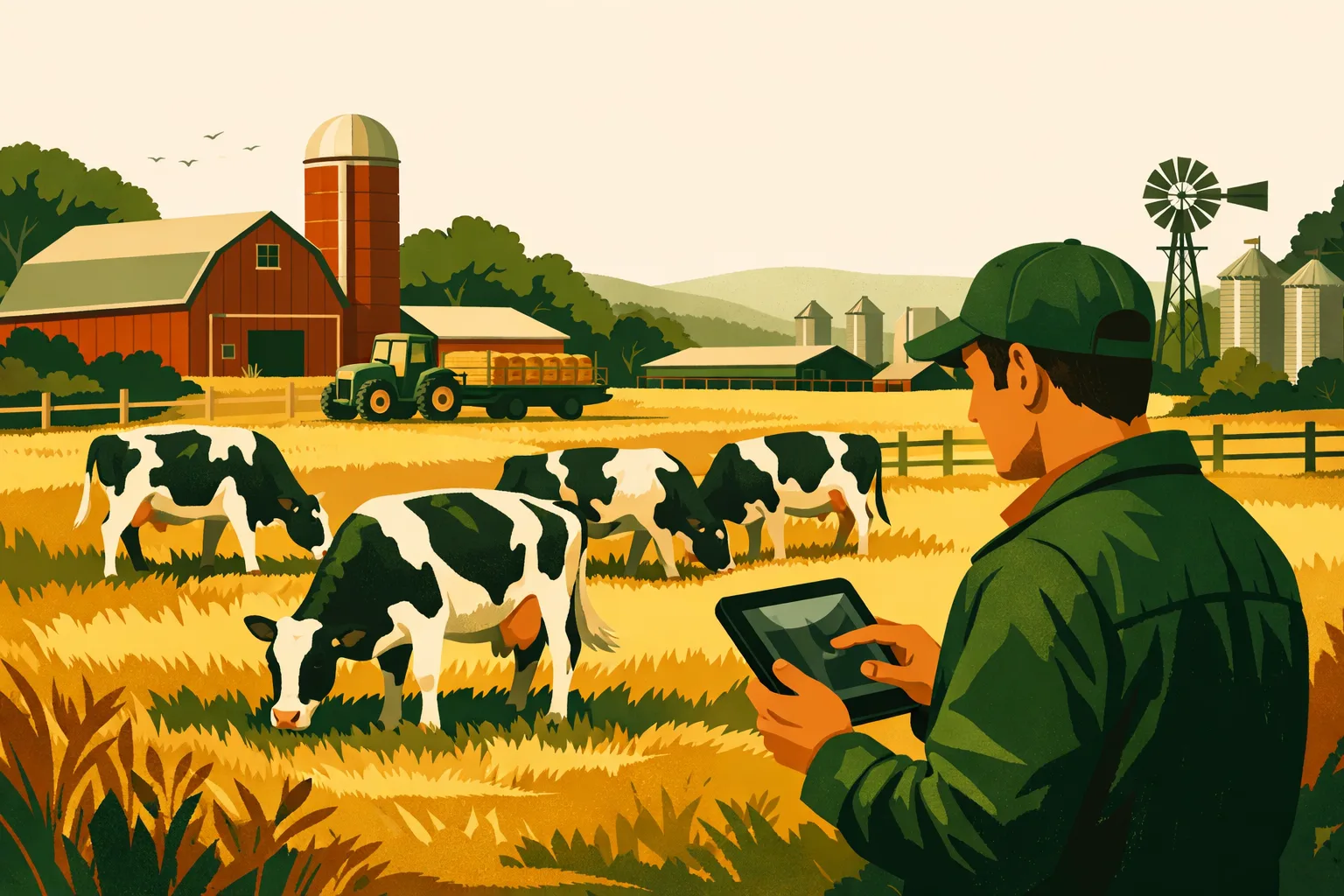
Margins in dairy are won or lost in the daily details: a missed heat, a delayed treatment, an inconsistent ration change, a slow response to mastitis, or records that are too scattered to support a good decision. The right software does not replace good stockmanship, but it can make a disciplined dairy team faster, more consistent, and better informed across every pen, parlor, and shift.
For commercial dairies, dairy cattle management software is moving from “digital recordkeeping” to operational control. By 2026, the most valuable systems will connect herd events, reproduction, health, milk production, labor tasks, feed activity, compliance records, and financial performance into one workflow.
This guide breaks down five practical ways software can change dairy cattle management at scale, what to look for, where costs show up, and how to implement systems without creating more work for your team.
Why Dairy Cattle Management Software Matters More in 2026
Dairy operations are managing more variables with less tolerance for delay. Labor remains tight, input costs can move quickly, processors and lenders expect better documentation, and animal health events need to be caught earlier.
A notebook, spreadsheet, or disconnected herd program may still work for a small group of animals, but it becomes a bottleneck on commercial dairies. Once multiple people are breeding, treating, moving, milking, feeding, and entering data, the operation needs a single source of truth.
Modern dairy cattle management software can help farms:
- Track each animal from birth or purchase through culling
- Improve breeding and pregnancy management
- Standardize health protocols and treatment records
- Connect milk production to cow-level and group-level decisions
- Reduce duplicate data entry
- Improve compliance documentation
- Assign tasks across employees and shifts
- Analyze performance by pen, lactation group, technician, sire, ration, or treatment protocol
For more on farm technology adoption, see the FarmsFlo software category and related farm operations guides at FarmsFlo.org.
What Counts as Dairy Cattle Management Software?
Dairy cattle management software is a digital system used to manage herd records, production data, animal health, breeding, inventory, labor, compliance, and operating decisions.
Depending on the operation, it may include:
- Herd management platforms
- Reproduction tracking systems
- Activity monitoring and rumination software
- Milk meter and parlor integrations
- Feed management systems
- Treatment and withdrawal tracking
- Calf and youngstock management tools
- Task management and labor scheduling
- Mobile apps for barn crews
- Analytics dashboards for owners and managers
- Integrations with accounting, processors, veterinarians, and consultants
The strongest setups do not rely on one screen alone. They combine software, mobile workflows, sensor data, employee accountability, and management discipline.
1. Use Software to Tighten Reproduction Management
Reproduction is one of the first areas where dairy cattle management software can create measurable operational change. Missed heats, delayed pregnancy checks, poor protocol compliance, and incomplete breeding records all cost time and money.
Software can help by turning reproduction from a memory-driven process into a schedule-driven system.
Key Reproduction Functions to Look For
A strong dairy reproduction module should support:
- Breeding eligibility lists
- Heat detection alerts
- Voluntary waiting period settings
- Timed AI protocol scheduling
- Pregnancy diagnosis tracking
- Open cow lists
- Days in milk filtering
- Technician and sire tracking
- Embryo transfer records, if applicable
- Recheck schedules
- Do-not-breed and cull flagging
- Integration with activity monitors or collars
The goal is not just to collect breeding events. The goal is to push the right cow to the right list at the right time, then make that list usable for the breeding crew.
How Software Changes Daily Repro Work
Without software, a manager may rely on printed lists, whiteboards, and employee memory. That can work until the herd grows, shifts rotate, or protocols change.
With a well-configured system, the workflow becomes tighter:
- Cow becomes eligible based on days in milk and health status.
- Software adds her to a breeding or watch list.
- Activity or rumination data supports heat detection.
- Breeding tech records service from a phone or barn terminal.
- Pregnancy check is automatically scheduled.
- Open cows return to the correct protocol.
- Managers review performance by group, technician, sire, and protocol.
That closed loop is where the operational gain happens.
Cost and Time Estimates
Costs vary widely based on herd size, software scope, and whether activity monitoring hardware is included. General planning ranges for commercial farms:
| Item | Typical Planning Range | Notes |
|---|---|---|
| Herd software subscription | Low monthly fee to several dollars per cow per month | Depends on modules and integrations |
| Activity collars/tags | Hardware purchase or lease model | Often the larger upfront cost |
| Setup and data migration | Several hours to several days | More time if records are inconsistent |
| Staff training | 2–8 hours per user group | Breeding team needs role-specific training |
| Ongoing management review | 30–90 minutes weekly | Needed to keep protocols clean |
Do not evaluate reproduction software only by subscription cost. A cheaper program that your team does not use consistently is more expensive than a system that drives reliable daily action.
Implementation Tip
Start with one reproduction workflow before expanding. For example, standardize:
- Fresh cow eligibility rules
- Breeding list generation
- Pregnancy check scheduling
- Open cow re-enrollment
- Do-not-breed flags
Once the team runs that process cleanly for 30–60 days, add deeper analysis.
2. Connect Health Records, Treatment Protocols, and Withdrawal Tracking
Health management is where software can protect both animal performance and business risk. A treatment that is missed, duplicated, recorded late, or withdrawn incorrectly can create serious problems.
Dairy cattle management software should make treatment decisions easier to execute and easier to audit.
What Health Modules Should Handle
At a farm-scale level, look for systems that support:
- Cow-level health events
- Standard treatment protocols
- Drug inventory records
- Dose, route, frequency, and duration
- Milk and meat withdrawal tracking
- Vet-authorized protocols
- Recurring treatment tasks
- Fresh cow checks
- Mastitis case records
- Lameness events
- Metritis, ketosis, displaced abomasum, pneumonia, and other common conditions
- Death loss and culling reason records
- Employee initials or user tracking
- Reports for veterinarians, processors, and audits
This matters because treatment records are only useful when they are timely, complete, and easy to retrieve.
Moving from Paper Treatment Sheets to Digital Protocols
Many dairies still use paper treatment logs, clipboards, and whiteboards. That can be workable, but paper systems often fail in three places:
- Treatments are recorded after the fact.
- Withdrawal dates are manually calculated.
- Managers cannot easily analyze repeat cases or protocol performance.
Software helps by making each treatment event part of a workflow. For example:
- Employee selects animal ID.
- Employee selects condition.
- Approved protocol appears.
- Dose and route are displayed.
- Milk and meat withdrawal dates calculate automatically.
- Follow-up tasks are created.
- Manager can see which cows are under treatment today.
- Reports are available if requested.
This can reduce confusion during shift changes and make compliance easier to document.
Practical Example: Mastitis Workflow
A digital mastitis workflow might look like this:
- Milker identifies abnormal milk.
- Cow is flagged in the parlor or mobile app.
- Culture result or severity score is entered.
- Treatment protocol is assigned based on farm rules.
- Cow is moved or flagged for hospital string.
- Withdrawal period is calculated.
- Follow-up exam is scheduled.
- Outcome is recorded.
- Manager reviews case trends by pen, stage of lactation, pathogen, or employee.
The value is not just better records. The value is faster decisions and fewer gaps between detection, treatment, withholding, and review.
Compliance and Audit Readiness
Processors, milk quality programs, animal welfare audits, lenders, and buyers may all expect better documentation. Software can help maintain:
- Treatment histories
- Veterinary directives
- Drug usage records
- Withdrawal compliance
- Training logs
- Mortality and culling reports
- Animal movement histories
- Calf care records
- Euthanasia documentation where required
For more operational compliance topics, review FarmsFlo resources in farm management and livestock.
Cost and Time Estimates
A health-focused implementation usually requires more training than basic recordkeeping because employees need to enter data correctly under time pressure.
Plan for:
- 4–12 hours to configure treatment protocols with your veterinarian
- 2–6 hours of employee training for treatment crews
- 1–3 hours to clean up drug inventory and withdrawal settings
- 15–30 minutes daily for manager review during the first month
- Weekly protocol checks after the system stabilizes
The biggest time investment is not software installation. It is aligning your farm’s actual treatment practices with the protocols in the system.
3. Turn Milk Production Data into Better Cow and Pen Decisions
Milk data is valuable only when it changes management behavior. Many dairies collect milk weights, components, SCC data, conductivity readings, parlor performance reports, and processor quality reports. The challenge is connecting those numbers to cow-level and group-level action.
By 2026, dairy cattle management software should help managers move beyond looking at yesterday’s tank average. It should connect production signals to reproduction, health, nutrition, environment, and labor.
Data Sources to Integrate
Depending on your setup, software may pull from:
- Parlor milk meters
- Robotic milking systems
- Bulk tank records
- Processor reports
- SCC testing data
- Components and quality reports
- Activity monitors
- Feed intake systems
- Cow records
- Health events
- Pen moves
- Weather or heat stress data
Not every operation needs every integration. The right approach depends on your management priorities and existing equipment.
High-Value Production Reports
For commercial dairy operators, the most useful reports are usually practical and repeatable. Look for:
- Fresh cow production trends
- Milk drop alerts
- Pen-level production changes
- High-SCC cow lists
- Chronic mastitis lists
- Cows below expected production
- Production by lactation group
- Production after pen move
- Production after ration change
- Milking speed or parlor throughput
- Robot visit frequency, if applicable
- Peak milk tracking
- Cull candidate reports
These reports help managers ask better questions:
- Did the ration change perform as expected?
- Are fresh cows ramping up normally?
- Is one pen underperforming?
- Are mastitis cases clustered by group?
- Are cow comfort changes showing up in milk?
- Are parlor routines affecting throughput?
Avoiding Dashboard Overload
One common failure with software is dashboard overload. The system shows too many graphs and not enough decisions.
A better approach is to set three levels of reporting:
Daily Reports
Used by supervisors and barn crews:
- Cows with major milk drops
- Treated cows and withdrawal status
- Fresh cow check list
- Breeding list
- Sick cow list
- Pen move list
Weekly Reports
Used by herd manager, owner, nutritionist, and veterinarian:
- Pen production trends
- Fresh cow outcomes
- Reproduction status
- Mastitis and SCC trends
- Cull and death loss review
- Feed efficiency indicators, if available
Monthly Reports
Used for strategic decisions:
- Rolling herd performance
- Replacement pipeline
- Cull reasons
- Protocol outcomes
- Labor efficiency
- Financial performance by enterprise or group, if integrated
Software should make these reports easy to run without custom work every time.
Comparison Table: Dairy Software Functions by Management Area
| Management Area | Software Function | Operational Outcome | Who Uses It Daily |
|---|---|---|---|
| Reproduction | Heat alerts, breeding lists, preg check schedules | Fewer missed tasks and cleaner protocol execution | Breeding tech, herd manager |
| Health | Treatment protocols, withdrawal tracking, follow-up tasks | Better compliance and more consistent care | Hospital crew, vet, manager |
| Milk Production | Milk drop alerts, SCC lists, pen trends | Faster response to production and quality issues | Milking manager, herd manager |
| Feed & Nutrition | Ration changes, delivery tracking, refusals | Better ration accountability and feed consistency | Feeder, nutritionist, manager |
| Labor & Tasks | Work lists, assignments, shift notes | Clearer accountability across crews | Supervisors, employees |
| Compliance | Audit records, drug logs, animal histories | Faster documentation and lower recordkeeping risk | Owner, manager, office staff |
The best software choice depends on which of these areas is currently limiting performance.
4. Manage Feed, Inventory, and Ration Execution More Precisely
Feed is one of the largest operating costs on a dairy, and ration consistency affects nearly every part of herd performance. Software can help connect what the nutritionist formulates, what the feeder loads, what cows receive, and how production responds.
Feed management software may be part of a herd platform or a separate system that integrates with it.
Where Feed Software Creates Value
A farm-scale feed module should help manage:
- Ration formulas
- Ingredient inventories
- Load sheets
- Mixing order
- Batch weights
- Delivery records
- Refusals
- Dry matter adjustments
- Shrink tracking
- Pen counts
- Feed cost estimates
- Ration change history
- Feeder performance
- Integration with scales or mixer wagons
The main goal is to reduce variation. A ration that is correct on paper but inconsistent in the bunk will not deliver the intended result.
Practical Feed Workflow
A strong digital feed process might run like this:
- Nutritionist updates ration.
- Manager approves or imports changes.
- Pen counts update from herd software.
- Feed software calculates loads.
- Feeder follows loading sequence and target weights.
- Actual weights are captured.
- Delivery time and pen are recorded.
- Refusals are entered.
- Inventory adjusts automatically.
- Manager reviews deviations and cost trends.
When connected properly, feed software reduces guesswork and makes feeder training easier.
Feed Inventory and Procurement
For larger dairies, ingredient inventory is not just a nutrition issue. It is a cash flow and procurement issue.
Software can help track:
- On-hand inventory
- Expected usage rate
- Delivery dates
- Vendor information
- Commodity contracts
- Shrink or loss
- Moisture changes
- Cost per ton
- Cost per cow per day
- Cost per group
Even if you do not integrate feed software with accounting, clean inventory records help prevent emergency purchases and missed contract planning.
Connecting Feed to Herd Outcomes
The real gain comes when feed records are connected to herd outcomes. For example:
- Did a ration change improve fresh cow performance?
- Did dry matter change explain a production drop?
- Are refusals increasing in one group?
- Did heat stress require bunk management changes?
- Are high-producing pens receiving consistent delivery times?
- Are feeder deviations linked to lower production?
Software will not answer every nutrition question, but it can help you and your nutritionist work from the same data.
Cost and Time Estimates
Commercial feed software costs depend on the number of mixers, users, integrations, and scale systems. Plan for:
- Software subscription or license fee
- Scale head integration, if needed
- Tablets or cab hardware
- Setup time for rations and ingredients
- Feeder training
- Ongoing ration updates
Typical implementation time can range from a few days for a simple setup to several weeks for a multi-site dairy with multiple mixers and inventory locations.
5. Build a Connected Labor, Task, and Accountability System
Many dairy software projects fail because they focus on records but ignore the people doing the work. A farm with 50 employees does not need more data entry for its own sake. It needs clear tasks, clean handoffs, and accountability.
By 2026, the most useful dairy cattle management software will function as an operating system for the team.
What Task Management Should Include
Look for software that can handle:
- Daily work lists
- Employee assignments
- Recurring protocols
- Shift notes
- Mobile task completion
- Cow-specific tasks
- Pen-level tasks
- Equipment or facility tasks
- Role-based access
- Notifications
- Manager review
- Audit trail by user
Tasks should be tied to actual farm operations, not generic office project management.
Examples include:
- Move cows from fresh pen to high group
- Recheck treated cow
- Breed eligible cow list
- Pull calves for vaccination
- Check dry-off list
- Trim cows on hoof care list
- Confirm withdrawal cows are marked
- Inspect waterers in heat-stress pens
- Verify feed refusals
- Review parlor wash issue
Reducing Communication Breakdowns
Dairy operations run across shifts. Day crew, night crew, milkers, feeders, breeders, hospital crew, mechanics, calf team, and managers all see different parts of the operation.
Software reduces breakdowns when it answers:
- What needs to be done today?
- Who is responsible?
- Was it completed?
- What changed since the last shift?
- Which cows need attention?
- Which tasks are overdue?
- Which issues require manager approval?
This is especially useful for multi-site dairies or operations with bilingual teams. Many systems offer mobile access, role-based screens, or simplified work lists that reduce training friction.
Standard Operating Procedures Inside the Workflow
SOP binders are useful, but they often sit in the office. Software can bring SOPs into daily work.
For example:
- Fresh cow check task includes the required exam steps.
- Treatment task displays approved protocol.
- Calf vaccination task shows product, dose, and age window.
- Pen move task shows destination and reason.
- Equipment inspection task includes pass/fail fields.
This helps turn procedures into repeatable execution.
Labor Efficiency Without Micromanagement
Software should not be used just to watch employees. The better use is to remove confusion and support consistent work.
A good labor system helps managers identify:
- Bottlenecks by shift
- Tasks frequently completed late
- Training gaps
- Overloaded employees
- Incomplete handoffs
- Recurring facility issues
- Protocols that are too complicated
This allows managers to fix systems instead of blaming people.
Practical Checklist: Choosing Dairy Cattle Management Software
Use this checklist before signing a contract or migrating records.
Step 1: Define the Business Problem
Identify the top three problems you need software to solve.
Common priorities:
- Missed breeding events
- Poor treatment documentation
- Inconsistent feed delivery
- Weak employee accountability
- Slow milk quality response
- Scattered calf records
- Compliance risk
- Duplicate data entry
- No clean reports for advisors
Do not buy software because it has the most features. Buy the system that solves your bottleneck.
Step 2: Map Current Workflows
Document how tasks happen today:
- Who records breedings?
- Who enters treatments?
- Where are withdrawal cows tracked?
- How are pen moves communicated?
- How are sick cows found?
- Who updates rations?
- How are calf events recorded?
- Which reports are reviewed weekly?
This exposes where software must fit the operation.
Step 3: List Required Integrations
Check whether the system can connect with:
- Parlor software
- Milk meters
- Robotic milkers
- Activity monitors
- Feed software
- Scale systems
- Accounting software
- Processor reports
- Lab testing systems
- RFID readers
- Mobile devices
- Veterinarian or consultant access
Integration is often where hidden costs appear.
Step 4: Confirm Mobile and Barn Usability
Ask:
- Can employees use it with gloves?
- Does it work in low-connectivity areas?
- Is the mobile app simple enough for daily use?
- Can screens be limited by role?
- Is Spanish or another language supported if needed?
- Can data be entered at the cow, pen, or batch level?
- How fast can a treatment or breeding be recorded?
A powerful desktop system is not enough if barn crews cannot use it.
Step 5: Review Reporting
Require sample reports for your priorities:
- Breeding list
- Preg check list
- Open cow list
- Treatment and withdrawal report
- Mastitis report
- SCC report
- Fresh cow report
- Cull reason report
- Feed deviation report
- Task completion report
Do not assume reports will be easy to customize. Ask to see them.
Step 6: Evaluate Data Ownership and Export
Before committing, confirm:
- Can you export all animal records?
- What file formats are available?
- How often can you back up data?
- What happens if you cancel?
- Who owns sensor data?
- Can your consultants access data?
- Are permissions adjustable?
Your herd data is a business asset.
Step 7: Plan Training Before Launch
Assign training by role:
- Owner/general manager
- Herd manager
- Breeding technician
- Hospital crew
- Milking supervisors
- Feeders
- Calf team
- Office staff
- Veterinarian/nutritionist access users
Training should use your real cows, real protocols, and real work lists.
Step 8: Pilot Before Full Rollout
Start with one high-value workflow:
- Reproduction lists
- Treatment records
- Fresh cow checks
- Feed delivery tracking
- Calf vaccination records
- Pen moves
Run the pilot for 30 days, fix problems, then expand.
Implementation Plan for a Commercial Dairy
A disciplined rollout matters more than the logo on the software.
Phase 1: Preparation
Estimated time: 1–3 weeks
Tasks:
- Name a project owner
- Clean up animal IDs
- Review current herd records
- Standardize pen names
- Confirm user roles
- Gather protocols
- Document key workflows
- Identify integrations
- Schedule training
Phase 2: Configuration
Estimated time: 1–4 weeks
Tasks:
- Import herd data
- Set reproduction rules
- Enter treatment protocols
- Configure withdrawal settings
- Build reports
- Set task templates
- Connect hardware or integrations
- Test mobile access
- Validate reports against old system
Phase 3: Pilot
Estimated time: 30–60 days
Tasks:
- Run one or two workflows digitally
- Track user issues
- Compare reports to reality
- Adjust screens and permissions
- Review data quality weekly
- Hold short feedback meetings
- Fix duplicate or missing records
Phase 4: Full Rollout
Estimated time: 1–3 months
Tasks:
- Add remaining workflows
- Train additional crews
- Retire duplicate paper records where safe
- Set weekly manager review rhythm
- Give advisors access
- Monitor completion rates
- Review cost and performance changes
Phase 5: Optimization
Estimated time: ongoing
Tasks:
- Refine reports
- Add integrations
- Automate recurring lists
- Review protocol outcomes
- Improve employee training
- Compare software data to financial results
Software implementation is not a one-time event. Treat it like building a new management system.
Common Mistakes to Avoid
Buying Before Defining the Workflow
If the farm has not defined how tasks should happen, software will digitize confusion. Start with workflow design.
Letting Too Many People Edit Core Settings
Limit access to protocols, withdrawal rules, pen structures, and key configuration. Bad settings create bad records.
Keeping Paper and Digital Systems Forever
Some overlap is useful during transition. Permanent duplicate systems create extra work and reduce trust in the software.
Ignoring Data Quality
Wrong cow IDs, inconsistent event names, missing treatment details, and delayed entries weaken every report. Assign someone to monitor data quality.
Undertraining Night and Weekend Crews
Many health and milking events happen outside the manager’s office hours. Every shift needs practical training.
Failing to Involve Advisors
Veterinarians, nutritionists, breeders, and consultants can help configure protocols and reports. Give them appropriate access when it improves decisions.
What to Ask Vendors Before You Buy
Use direct questions:
- Can the system handle our herd size and multiple sites?
- Which parlor, robot, feed, and sensor systems do you integrate with?
- How is data imported from our current records?
- Can treatment protocols be customized with vet approval?
- How are withdrawal dates calculated and displayed?
- Can employees use the mobile app offline?
- What languages are supported?
- Can permissions be limited by role?
- What reports come standard?
- How difficult is custom reporting?
- What training is included?
- What support hours are available?
- How are updates handled?
- Can we export all records?
- What is the total cost including hardware, setup, support, and integrations?
Ask for a live demonstration using your workflows, not a generic sales demo.
Budgeting for Dairy Cattle Management Software
Software costs vary by provider, herd size, modules, hardware, and support. Build a budget that includes both direct and indirect costs.
Direct Costs
- Monthly or annual subscription
- Per-cow charges
- Setup fees
- Data migration
- Hardware such as RFID readers, tablets, tags, collars, or scale interfaces
- Integration fees
- Training fees
- Support packages
Indirect Costs
- Manager time during setup
- Employee training time
- Data cleanup
- Protocol review with veterinarian
- Temporary duplicate recordkeeping
- Process changes
- Connectivity improvements in barns
Budgeting Approach
For most commercial dairies, it is better to evaluate software against operational improvement than to focus only on monthly price. Ask:
- Which labor tasks will become faster?
- Which errors will be reduced?
- Which decisions will improve?
- Which compliance risks will be easier to manage?
- Which reports will support better culling, breeding, feeding, or treatment decisions?
If the system does not create better decisions or better execution, it is just another expense.
The 2026 Standard: Connected, Mobile, and Decision-Ready
By 2026, dairy cattle management software should meet a higher standard than basic recordkeeping.
Look for systems that are:
- Mobile-friendly for barn crews
- Integrated with key equipment and data sources
- Configurable to farm protocols
- Strong on treatment and withdrawal records
- Useful for reproduction execution
- Capable of pen-level and cow-level analysis
- Easy to report from
- Secure and exportable
- Practical for employees, not just managers
- Supported by responsive training and service
The winning operations will not be the ones with the most software. They will be the dairies that connect software to daily discipline: clear work lists, accurate records, fast response, and regular management review.
How FarmsFlo Helps
FarmsFlo is built for commercial farm operators who need clearer workflows, better team coordination, and practical visibility across daily operations. For dairy managers, that means moving beyond scattered notes, spreadsheets, and disconnected task lists into a system your team can actually use.
With FarmsFlo, you can organize farm work, assign responsibilities, track completion, improve communication across shifts, and keep operational details from falling through the cracks. It fits alongside your herd, feed, and compliance systems by helping managers turn plans into completed work.
If your dairy is preparing to modernize management software by 2026, start with the workflows that matter most: breeding lists, treatment follow-ups, feed tasks, pen moves, calf work, equipment checks, and shift handoffs.
Try FarmsFlo and see how a cleaner operating system can support your dairy team at scale: start a trial at farmsflo.com.