5 Tested Agribusiness and Management Tips That Actually Boost Profit in 2026
Discover five actionable tips for enhancing your farm's profitability through smart agribusiness and management strategies in 2026.
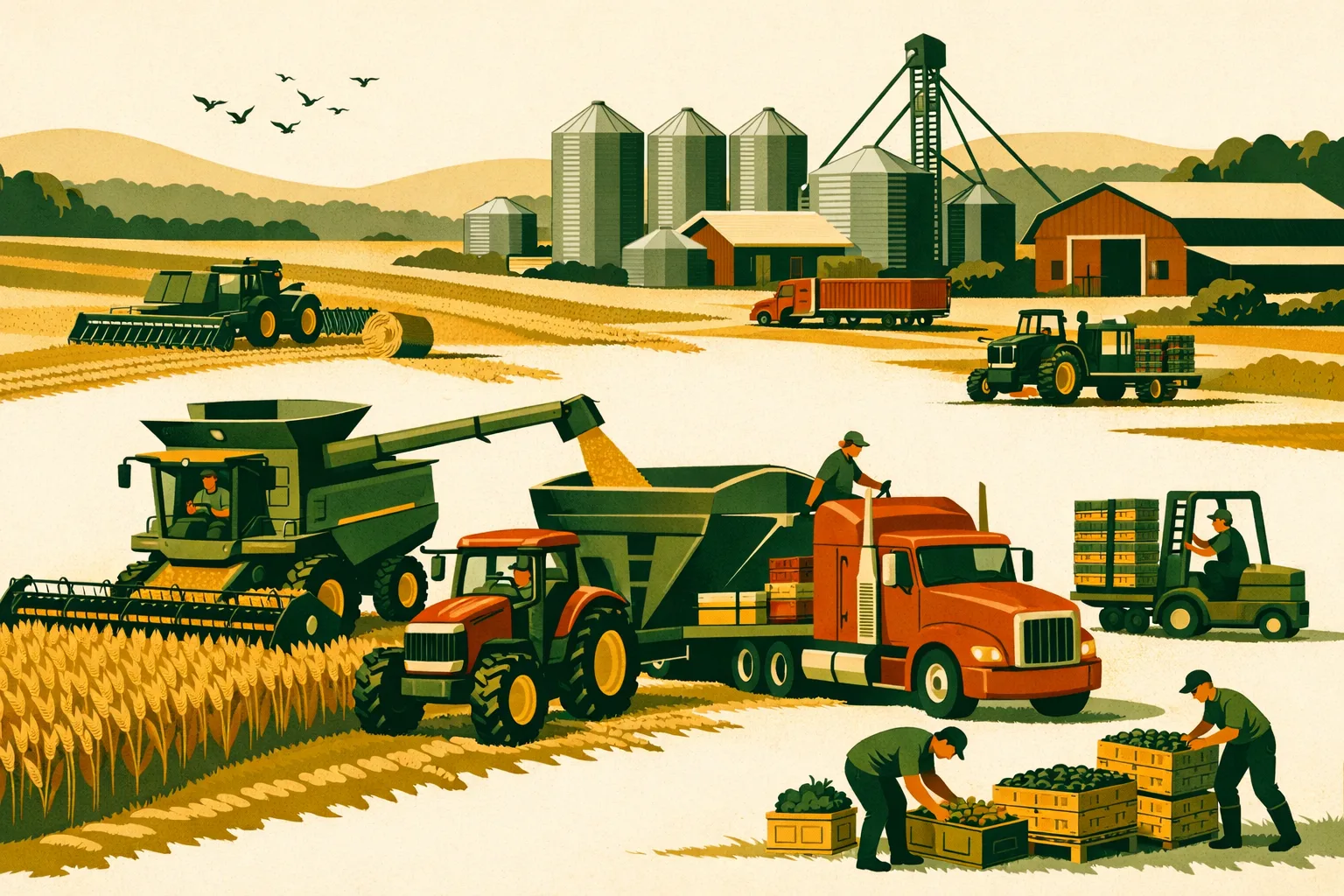
A profitable farm is rarely the one with the highest yield on every field. It is usually the operation that knows its numbers early, makes decisions before the season forces them, and manages labor, machinery, inputs, and marketing as one connected business system. In a tighter margin environment, strong agribusiness and management practices can separate a farm that is busy from one that is genuinely profitable.
Modern farm profitability depends on more than agronomy. Seed selection, chemical programs, labor plans, equipment replacement, land rent, crop insurance, storage, marketing, and cash flow all interact. A good yield can still lose money if it was produced with the wrong cost structure or sold into the wrong window.
This guide focuses on practical, farm-scale management moves for commercial operators managing 50 to 5,000+ acres. These are not theory-heavy business school ideas. They are field-tested operating disciplines that can help farm managers protect margin, reduce waste, and make better decisions throughout the season.
For more farm business planning resources, see the FarmsFlo Earn category.
Why Agribusiness and Management Matters More in 2026
The farm economy has become less forgiving. Input prices remain volatile, interest costs affect operating lines and equipment purchases, labor availability is inconsistent, and commodity markets can move quickly. Many farms already run lean, but “lean” is not the same as managed.
Good agribusiness and management means the farm has a clear system for:
- Knowing cost of production by crop, field, and acre
- Tracking working capital and cash flow before problems appear
- Matching equipment, labor, and acres to avoid hidden inefficiencies
- Making marketing decisions based on margin, not hope
- Measuring whether each enterprise is earning its place on the farm
The mistake many farms make is treating management as office work that happens after the “real work” is done. In reality, management determines which work deserves priority.
A farm with average yields, tight cost control, and disciplined sales can outperform a farm with excellent yields but weak financial visibility. Profit is not produced only in the field; it is managed across the whole operation.
1. Build a True Cost-of-Production System by Field
Most commercial farms know their general input costs. Fewer know their real field-level cost of production before harvest. That gap can quietly drain profit.
Field-level cost tracking is one of the highest-return agribusiness and management practices because it shows which acres create margin and which acres only create activity. This matters for rental negotiations, crop rotation planning, input prescriptions, drainage priorities, and marketing decisions.
What to Track
At minimum, track costs in these categories:
- Seed
- Fertilizer
- Herbicide, fungicide, insecticide, and adjuvants
- Lime and soil amendments
- Fuel
- Labor
- Equipment ownership and repairs
- Custom hire
- Crop insurance
- Land rent or land ownership cost
- Interest on operating capital
- Drying, storage, and trucking
- Management and overhead allocation
Many farms track direct input costs but leave out machinery depreciation, owner labor, interest, and overhead. That can make an acre look profitable when it is not.
Field-Level Cost Example
A corn field might show strong yield potential, but if it requires extra tillage, more herbicide passes, longer trucking distance, and high rent, its profit may lag behind a lower-yield field with lower total cost.
The goal is not to punish difficult fields. The goal is to know what they require and whether the return justifies the investment.
Practical Cost Estimate
For most farms, building a usable cost-of-production system requires:
| Farm Size | Setup Time | Ongoing Time | Likely Cost |
|---|---|---|---|
| 50-300 acres | 4-8 hours | 1-2 hours/month | Spreadsheet or basic farm software |
| 300-1,500 acres | 8-20 hours | 2-4 hours/month | Farm management software recommended |
| 1,500+ acres | 20-40 hours | 4-8 hours/month | Software plus bookkeeping support |
The cost is not only software. It is the discipline to enter data consistently and review it before decisions are made.
How to Start Without Overcomplicating It
Do not wait for perfect records. Start with a simple structure:
- List every field.
- Assign crop and expected yield.
- Add land cost per acre.
- Add planned seed, fertilizer, and chemical costs.
- Estimate machinery and labor cost per acre.
- Estimate hauling, drying, and storage costs.
- Add overhead allocation.
- Calculate break-even price.
Once this is built, update it after major purchases, field operations, and yield results.
Management Decisions This Unlocks
A field-level cost system helps answer questions such as:
- Should this rented farm be renewed?
- Which acres justify fungicide?
- Where should drainage investment go first?
- Which field needs a lower-cost crop plan?
- What is the minimum profitable selling price?
- Are equipment costs too high for the acres covered?
For more business-side farm planning, visit the FarmsFlo farm finance and earning resources.
2. Manage Cash Flow Weekly During Peak Seasons, Not Quarterly
Many farm operators review finances after planting, after spraying, after harvest, or when the lender asks. That is too late for good control.
Cash flow problems usually develop gradually. A delayed grain sale, prepaid input invoice, unexpected equipment repair, or slow receivable can create pressure before the manager sees it. Weekly cash flow management gives you room to adjust before the operating line gets tight.
Separate Profit From Cash Flow
A farm can be profitable on paper and still run short of cash. This happens when:
- Grain is stored but not sold
- Inputs are prepaid months before revenue arrives
- Equipment payments are due before crop sales
- Insurance proceeds or government payments are delayed
- Accounts receivable are not collected quickly
- Family living draws are not budgeted clearly
Strong agribusiness and management requires both profit planning and cash timing.
Use a 13-Week Cash Flow Forecast
A 13-week cash flow forecast is one of the simplest tools for better control. It gives enough visibility to manage near-term decisions without becoming too detailed.
Track weekly:
- Beginning cash balance
- Expected crop sales
- Livestock sales, if applicable
- Custom work income
- Government or insurance payments
- Input bills due
- Payroll
- Fuel
- Repairs
- Loan payments
- Rent payments
- Taxes
- Owner draws
- Ending cash balance
- Operating line availability
Update the forecast every week during planting, spraying, harvest, and major sales periods. During slower months, update it every two weeks.
Watch These Cash Flow Warning Signs
A farm manager should act early if any of these appear:
- Operating line use is rising faster than planned
- Input invoices are being paid late
- Grain must be sold urgently to meet bills
- Credit card balances are carrying over
- Repair bills are being delayed
- Vendor terms are getting tighter
- Planned capital purchases depend on uncertain sales
- Owner draws are not aligned with business cash flow
These warning signs do not automatically mean the farm is in trouble. They mean management needs to tighten.
Practical Time Estimate
A 13-week cash flow forecast usually takes:
- 2-4 hours to set up
- 20-45 minutes per weekly update
- 1-2 hours monthly to compare against actuals
This is a small time investment compared with the cost of poor timing, forced sales, or avoidable interest expense.
Link Cash Flow to Marketing
Cash flow should directly inform grain marketing. If bills are due in March and June, the marketing plan should account for that. Otherwise, the farm may be forced to sell into weak pricing windows.
A better approach is to match sales targets with cash needs:
- Identify required cash by month.
- Calculate bushels needed to generate that cash.
- Compare current bids against break-even prices.
- Sell incrementally when profitable windows appear.
- Avoid storing grain without a cash and margin reason.
Storage is a tool, not a strategy by itself.
3. Use Enterprise Budgets to Cut Low-Return Activity
Many diversified farms have enterprises that feel necessary because they have always been part of the operation. That might include hay, custom work, cattle, specialty crops, seed production, trucking, snow removal, or rented ground far from the main farm.
Some of these activities are highly profitable. Others consume labor, equipment, and management attention without producing enough return.
An enterprise budget shows whether each activity is earning its place.
What Is an Enterprise Budget?
An enterprise budget isolates revenue and expenses for one part of the farm. Instead of looking at the operation as one blended business, it separates each profit center.
Examples:
- Corn acres
- Soybean acres
- Wheat acres
- Hay acres
- Cow-calf herd
- Finishing cattle
- Custom spraying
- Custom harvesting
- Grain trucking
- Seed sales
- Vegetable production at commercial scale
The budget should include direct costs and a fair share of shared costs.
Direct Costs vs. Shared Costs
Direct costs are easier:
- Seed
- Feed
- Fertilizer
- Chemical
- Crop insurance
- Vet and medicine
- Bedding
- Packaging
- Hired custom services
Shared costs require more judgment:
- Tractors
- Combines
- Loaders
- Trucks
- Buildings
- Shop expenses
- Labor
- Utilities
- Insurance
- Management time
Do not ignore shared costs because they are difficult to allocate. That is how weak enterprises hide inside the whole farm.
Enterprise Comparison Table
Use a structure like this to compare major enterprises:
| Enterprise | Revenue/Acre or Unit | Direct Cost | Shared Cost Allocation | Net Return | Management Action |
|---|---|---|---|---|---|
| Corn | $___/acre | $___ | $___ | $___ | Expand, maintain, or reduce |
| Soybeans | $___/acre | $___ | $___ | $___ | Adjust rotation or inputs |
| Hay | $___/acre | $___ | $___ | $___ | Improve pricing or reduce acres |
| Custom Harvest | $___/hour or acre | $___ | $___ | $___ | Raise rates or exit |
| Trucking | $___/mile or load | $___ | $___ | $___ | Charge full cost or limit use |
The value is not only in the numbers. It is in the management conversation those numbers force.
Questions to Ask After Budgeting
Once you build enterprise budgets, ask:
- Which enterprise produces the best return per acre?
- Which produces the best return per labor hour?
- Which uses the most equipment capacity during peak windows?
- Which creates the most cash flow pressure?
- Which depends on unpaid family labor?
- Which would look weak if full equipment cost was included?
- Which enterprise improves the overall system even if direct profit is modest?
That last question matters. A wheat crop, for example, may not always be the highest-margin crop, but it may spread labor, reduce weed pressure, allow manure application, create straw revenue, or improve rotation flexibility. Good management considers system value, not just single-line profit.
When to Cut or Restructure an Enterprise
Consider reducing, restructuring, or exiting an enterprise when:
- It loses money after full cost allocation
- It competes with higher-return work during peak season
- It relies on aging equipment that needs replacement
- It requires specialized labor you cannot reliably find
- It creates safety or compliance risk
- It adds stress without a clear margin contribution
- It distracts from core acres or livestock performance
Cutting activity can feel like shrinking the farm. In reality, it may increase profit by focusing resources where they earn the most.
Cost and Time Estimate
Building enterprise budgets for a mid-size farm generally requires:
- 4-6 hours for the first major crop enterprise
- 2-4 hours for each additional enterprise
- 1-2 hours per quarter to update
- 1 year of records to improve accuracy
- 3 years of records to identify reliable trends
The first version will be imperfect. Build it anyway.
For more management ideas tied to profitability, browse FarmsFlo’s Earn resources.
4. Tighten Labor and Equipment Efficiency Before Buying More Capacity
When the season gets tight, the common response is to buy a bigger tractor, add another truck, upgrade the planter, or hire another employee. Sometimes that is the right move. Often, the cheaper first step is to improve scheduling, maintenance, and workflow.
Labor and equipment are two of the largest controllable cost areas in many commercial farms. Better utilization can raise profit without adding acres.
Measure Bottlenecks Before Solving Them
Before buying capacity, identify the true bottleneck.
Common bottlenecks include:
- Planter acres per day
- Sprayer tendering time
- Combine unloading delays
- Grain cart availability
- Truck turnaround time
- Dryer capacity
- Labor availability at livestock chore times
- Shop repair backlog
- Parts runs during fieldwork
- Poor field sequencing
The machine that feels too small may not be the real issue. A sprayer may cover enough acres per day, but poor water logistics may limit output. A combine may have enough capacity, but trucks or drying may slow harvest.
Track Productive Hours
During planting and harvest, track:
- Engine hours
- Field working hours
- Road time
- Idle time
- Repair downtime
- Waiting time
- Weather delays
- Acres completed per day
- Acres completed per labor hour
Even a few weeks of tracking can reveal expensive patterns.
Example: If a planting crew loses 90 minutes per day waiting on seed, fertilizer, or instructions, that is 10.5 hours per week. During a short planting window, that can mean delayed acres and yield risk.
Use Pre-Season Readiness Systems
Pre-season preparation has a direct profit effect because breakdowns during narrow windows can be costly.
Create written checklists for:
- Planter meters, openers, closing wheels, downforce, seed tubes
- Sprayer pumps, nozzles, strainers, monitors, booms, valves
- Combine belts, chains, bearings, concaves, sieves, augers, sensors
- Grain carts, wagons, tires, lights, scales, PTO shafts
- Trucks, brakes, hoists, tarps, DOT requirements
- Tender trailers, pumps, hoses, fittings, meters
- Shop inventory, common parts, fluids, filters, batteries
A farm does not need corporate complexity, but it does need repeatable systems.
Practical Checklist: 30-Day Profit Efficiency Action List
Use this action list before the next major fieldwork season.
Week 1: Identify Cost Leaks
- Review last season’s repair costs by machine.
- List the top 5 delays during planting, spraying, or harvest.
- Compare actual acres/day against expected acres/day.
- Identify fields with excessive road time or difficult access.
- Review overtime, seasonal labor, and custom hire expenses.
- Calculate machinery cost per acre for major equipment.
Week 2: Improve Workflow
- Create fieldwork sequence maps by crop, soil type, and distance.
- Assign clear roles for operators, tender drivers, and support staff.
- Set communication standards for daily start times and task changes.
- Stage seed, chemical, fertilizer, fuel, and parts before fieldwork starts.
- Build a rain-day repair and maintenance priority list.
- Confirm vendor delivery timing and after-hours support.
Week 3: Reduce Downtime
- Complete pre-season inspections on critical equipment.
- Stock high-failure parts and wear items.
- Service tender equipment, not just field machines.
- Test monitors, GPS, rate controllers, and data transfer systems.
- Label hoses, valves, chemical totes, and meters to reduce mistakes.
- Review safety procedures for transport, chemical handling, and PTO equipment.
Week 4: Measure and Adjust
- Track field hours vs. total hours daily.
- Record downtime causes in a shared log.
- Review acres completed each evening during peak season.
- Adjust crew assignments based on bottlenecks.
- Compare actual fuel use against expected use.
- Hold a short end-of-week review with the team.
This list is simple, but if followed consistently, it can reduce avoidable delays and improve equipment return.
Estimate the Cost of Downtime
Downtime cost varies by crop, window, and operation size. To estimate your own cost, calculate:
- Acres delayed per day
- Expected margin per acre
- Yield or quality risk from delay
- Extra labor or repair cost
- Custom hire cost if you must catch up
For example, if a planter breakdown delays 250 acres and forces later planting, the true cost may include repair labor, parts, overtime, and yield risk. The repair bill alone does not show the full loss.
Buy Equipment With Full-Cost Discipline
Before purchasing equipment, run the numbers:
- Purchase price
- Down payment
- Interest cost
- Depreciation
- Insurance
- Repairs
- Fuel
- Labor requirement
- Storage
- Technology subscriptions
- Expected resale value
- Acres or hours used per year
- Cost per acre or hour
- Alternative custom hire cost
A new machine may still be justified. The key is knowing whether it solves a real bottleneck and improves margin.
Strong agribusiness and management means avoiding both extremes: under-equipping the farm until timeliness suffers, or over-equipping because machinery feels safer than financial discipline.
5. Build a Margin-Based Marketing and Risk Plan
Many farms still separate production decisions from marketing decisions. That creates risk. If crop plans are built without a selling strategy, the farm may produce bushels without protecting margin.
A margin-based marketing plan starts with cost of production, then sets pricing targets that meet profit goals.
Know Your Break-Even Before Selling
Break-even should be calculated before the crop is planted and updated through the season.
At minimum:
Total cost per acre ÷ expected yield = break-even price per bushelExample:
$780 cost per acre ÷ 200 bu/acre = $3.90/bu break-evenThen add desired profit:
($780 cost + $120 target profit) ÷ 200 bu = $4.50/bu target priceThis gives marketing discipline. When bids reach profitable levels, the farm can act instead of guessing.
Use Sales Tranches
Rather than trying to pick the highest price, divide expected production into sales tranches.
Example:
- 10-15% when price covers cost plus minimum margin
- 10-20% when price reaches target margin
- 10-20% when seasonal or basis opportunity appears
- Additional sales after yield confidence improves
- Remaining bushels managed with storage, basis contracts, or post-harvest strategy
This approach reduces emotional decision-making.
Match Marketing Tools to Risk
Commercial farms may use several tools:
- Cash forward contracts
- Hedge-to-arrive contracts
- Basis contracts
- Futures hedges
- Options
- Minimum price contracts
- Storage and delayed pricing
- Crop insurance
- Revenue protection policies
Each tool has tradeoffs. Do not use tools the management team does not understand. A simple cash contract used well can be better than a complex hedge used poorly.
Review Crop Insurance as a Management Tool
Crop insurance should not be treated as a once-a-year paperwork decision. It affects marketing confidence, lender conversations, and risk tolerance.
Review:
- Coverage level
- Unit structure
- Revenue protection vs. yield protection
- Historical yields
- Enterprise unit tradeoffs
- Premium cost
- Marketing commitments protected by coverage
- Prevented planting exposure
- Replant provisions
A manager should understand how much production can be marketed safely before yield is known and how insurance coverage supports that plan.
Avoid These Marketing Mistakes
Common profit leaks include:
- Selling only when cash is needed
- Ignoring basis
- Holding grain without calculating carry
- Refusing profitable sales because prices “might go higher”
- Forward contracting too much without production risk protection
- Not knowing storage cost per bushel
- Letting old crop interfere with new crop decisions
- Failing to update break-even after input cost changes
Grain marketing does not need to be perfect to be profitable. It needs to be disciplined.
Calculate Storage Decisions
Before storing grain, calculate:
- Commercial storage fees or on-farm storage ownership cost
- Interest on stored grain value
- Shrink
- Quality risk
- Handling cost
- Aeration electricity
- Labor
- Basis improvement potential
- Futures carry
- Cash flow needs
If storage does not have a clear path to higher net return or better logistics, it may only delay decision-making.
Set Written Marketing Rules
A written plan should include:
- Break-even by crop
- Target profit per acre
- Percent of expected production eligible for forward sales
- Price levels for sales
- Basis targets
- Storage limits
- Cash flow sale requirements
- Crop insurance assumptions
- Who has authority to execute sales
- Review schedule
This turns marketing from reaction into management.
Build a Farm Management Dashboard That Gets Reviewed Monthly
The most profitable farms usually do not rely on memory. They use visible numbers. A farm management dashboard does not need to be fancy, but it must show the right indicators.
Core Metrics to Track
For a commercial crop operation, track:
- Cost per acre by crop
- Cost per bushel by crop
- Break-even price
- Revenue per acre
- Gross margin per acre
- Net margin per acre
- Working capital
- Operating line balance
- Debt service due
- Grain inventory
- Percent of crop marketed
- Machinery cost per acre
- Labor cost per acre
- Acres completed per day during peak seasons
- Repair cost by machine
- Fertilizer cost per acre
- Chemical cost per acre
- Rent cost per acre
For livestock or mixed farms, add:
- Feed cost per head or hundredweight
- Average daily gain
- Conception rate
- Death loss
- Cull rate
- Veterinary cost
- Labor per head
- Yardage cost
- Market weight timing
- Contract performance
Monthly Review Format
Schedule a monthly management meeting, even if it is only the owner and one key employee or family member.
Agenda:
- Review cash position.
- Review upcoming bills and expected income.
- Compare actual costs against budget.
- Review crop marketing status.
- Review fieldwork or livestock performance metrics.
- Discuss labor issues.
- Review equipment downtime and repairs.
- Decide actions for the next 30 days.
- Assign responsibility and deadlines.
Keep it short. A focused 60-90 minute meeting can prevent thousands of dollars in drift.
What to Do When Numbers Are Off
If costs run higher than budget, do not wait until year-end. Identify the cause:
- Price increase
- Rate increase
- Application error
- Rework
- Poor purchasing timing
- Equipment problem
- Labor inefficiency
- Weather-related change
- Accounting allocation issue
Then decide whether to adjust crop plans, marketing targets, purchases, or cash flow assumptions.
The benefit of a dashboard is speed. Problems noticed early are usually cheaper to fix.
Strengthen Vendor, Lender, and Landowner Management
Agribusiness and management also includes relationship management. A farm’s profitability is affected by how it works with lenders, landlords, input suppliers, grain buyers, veterinarians, mechanics, and custom operators.
Manage Vendors Like Strategic Partners
Input suppliers and service providers can affect both cost and execution. Evaluate them on more than price.
Consider:
- Product availability
- Delivery reliability
- Agronomic support
- Billing accuracy
- Financing terms
- Return policy
- After-hours support
- Tendering capacity
- Emergency response
- Willingness to review programs after the season
Low price is valuable only if service failures do not cost more later.
Prepare Better Lender Meetings
A lender should not be the first person to tell you your numbers. Before meeting, prepare:
- Updated balance sheet
- Crop plans
- Cost-of-production budgets
- Cash flow forecast
- Grain inventory
- Marketing plan
- Equipment debt schedule
- Capital purchase plan
- Recent tax returns or financial statements
- Risk management strategy
Well-managed farms tend to get better lender conversations because they can show control, not just collateral.
Improve Landowner Conversations
For rented land, profitability depends heavily on rent structure and relationship quality. Landowners may care about more than the highest bid. Many also value:
- Soil stewardship
- Timely payment
- Clear communication
- Weed control
- Drainage maintenance
- Respect for property boundaries
- Long-term care
- Professional reporting
Prepare annual landowner updates showing:
- Crop grown
- Conservation practices
- Soil test activity
- Drainage or erosion concerns
- Yield ranges if appropriate
- Planned improvements
- Photos of maintenance work
- Rent payment schedule
This can help protect access to land and support more productive rent negotiations.
Reduce Profit Leaks From Poor Recordkeeping
Recordkeeping is not just compliance. It is a profit tool. Weak records create repeated mistakes, missed deductions, billing errors, inventory confusion, and poor decision-making.
Records Every Commercial Farm Should Maintain
Keep organized records for:
- Field operations
- Input applications
- Chemical rates and dates
- Fertilizer applications
- Seed varieties and populations
- Harvest yields by field
- Grain inventory and movements
- Livestock treatments and performance
- Equipment maintenance
- Fuel use
- Labor hours
- Custom work performed
- Invoices and payments
- Lease agreements
- Crop insurance documents
- Safety and compliance records
Record Data at the Source
The best record is captured when the work happens. Waiting until winter increases errors.
Use:
- Mobile entry
- Shared task lists
- Equipment logs
- Load tickets
- Field maps
- Digital invoices
- Photo records
- Cloud storage
- Standard naming conventions
If the farm team cannot easily enter or find data, the system will fail.
Assign Record Ownership
Every record type should have an owner.
Examples:
- Sprayer operator records applications
- Farm manager reviews chemical records weekly
- Bookkeeper enters invoices
- Grain manager updates inventory
- Shop lead tracks repairs
- Owner reviews monthly dashboard
Clear ownership prevents the common problem where everyone assumes someone else handled it.
Practical Implementation Plan for the Next 90 Days
Trying to overhaul farm management all at once can stall progress. Use a 90-day rollout.
Days 1-30: Get Financial Visibility
Focus on:
- Building field list
- Estimating cost of production
- Setting break-even prices
- Building 13-week cash flow forecast
- Reviewing operating loan status
- Listing all major payables and receivables
- Setting monthly review dates
Deliverables:
- Cost-per-acre estimate by crop
- Cash flow forecast
- Basic marketing targets
- Priority list of financial risks
Days 31-60: Improve Operations Control
Focus on:
- Equipment readiness checklists
- Labor role assignments
- Fieldwork sequence planning
- Bottleneck tracking
- Repair cost review
- Vendor delivery planning
- Downtime logging
Deliverables:
- Pre-season equipment checklist
- Labor plan
- Downtime log
- Top 5 operational bottlenecks
- Action plan for reducing delays
Days 61-90: Build Management Discipline
Focus on:
- Enterprise budgets
- Marketing plan updates
- Vendor and lender review
- Landowner communication plan
- Monthly dashboard
- Recordkeeping system
- Management meeting rhythm
Deliverables:
- Enterprise budget drafts
- Written marketing rules
- Monthly dashboard
- Record ownership list
- Management meeting agenda
A 90-day plan creates momentum without overwhelming the farm team.
Common Agribusiness and Management Mistakes to Avoid
Even well-run farms can lose margin through avoidable management habits.
Mistake 1: Chasing Yield Without Margin
High yields matter, but only profitable yield matters. A 5-bushel gain that costs more than it returns is not progress. Evaluate input decisions against expected response and grain price.
Mistake 2: Treating All Acres the Same
Fields differ by soil, drainage, fertility, weed pressure, distance, rent, and yield stability. Variable management is often more profitable than blanket spending.
Mistake 3: Buying Equipment Before Fixing Workflow
A new machine may be needed, but first confirm the bottleneck. Tendering, trucking, labor, and maintenance often limit capacity more than horsepower.
Mistake 4: Making Marketing Decisions Without Break-Even
Selling based on emotion, coffee shop talk, or cash pressure weakens control. Break-even and margin targets should drive decisions.
Mistake 5: Letting Records Pile Up
Delayed records become unreliable records. Build systems that capture data as work happens.
Mistake 6: Ignoring Management Time
Owner and manager time has value. If an enterprise consumes high-value management time for low return, the true cost is higher than the books show.
Mistake 7: Waiting Until Year-End to Review Profit
Year-end review is useful, but management decisions must happen during the season. Monthly review is a minimum for serious commercial operations.
What Profit-Focused Farm Managers Do Differently
The best-managed commercial farms tend to share several habits:
- They know break-even prices before selling.
- They review cash flow regularly.
- They separate enterprises instead of blending everything.
- They measure machinery and labor efficiency.
- They prepare equipment before peak windows.
- They communicate clearly with lenders and vendors.
- They treat landowners professionally.
- They track data consistently.
- They make decisions from margin, not habit.
- They review performance while there is still time to adjust.
These habits do not require the largest acreage base or newest equipment line. They require discipline, clear systems, and timely information.
Agribusiness and management is not about making the farm feel corporate. It is about making sure the work already being done produces the return it should.
How FarmsFlo Helps
FarmsFlo helps commercial farm operators bring financial planning, task management, records, and operational visibility into one practical system. Instead of chasing spreadsheets, paper notes, text messages, and scattered records, farm managers can organize the information needed to make better decisions faster.
With FarmsFlo, your operation can:
- Track field activities and task completion
- Improve communication across the farm team
- Organize records for better management review
- Support more consistent planning and follow-through
- Reduce missed details during busy seasons
- Keep operational information accessible when decisions need to be made
Better agribusiness and management starts with better visibility. If your farm is ready to tighten execution, reduce profit leaks, and manage the season with more control, start a trial at farmsflo.com.