5 Cattle Management Programs That Actually Transform Your Farm Operations by 2026
Uncover cattle management programs that revolutionize your farm operations by 2026.
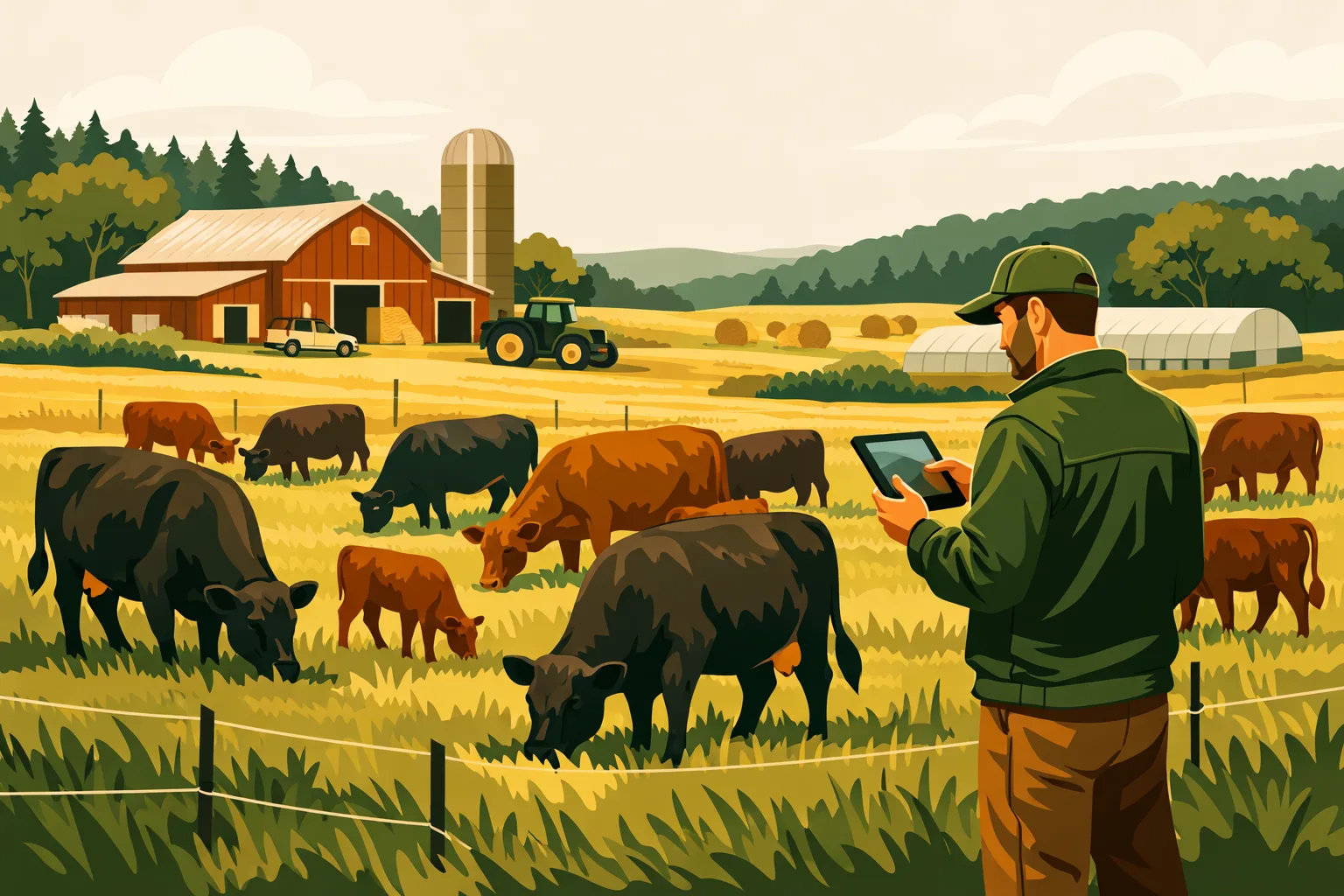
The cattle operations that gain ground over the next two seasons will not be the ones with the most paperwork, the biggest spreadsheet, or the newest chute-side gadget. They will be the operations that turn daily herd activity into usable decisions: which cows stay, which groups need attention, where feed costs are leaking, when labor is overloaded, and how each pasture is performing against carrying capacity.
A strong cattle management program is not just software. It is a working system for running the herd, the land, the people, and the records together. For commercial cow-calf, stocker, backgrounding, dairy-beef, and mixed crop-livestock farms, the right program can reduce management drag and make the farm easier to scale.
Below are five cattle management programs that can materially improve farm operations by 2026 when implemented with discipline.
What Makes a Cattle Management Program Worth Using?
A cattle management program should help you make better decisions faster. If it only creates extra data entry, it will fail on a working farm.
For a 50-acre grass-based cattle farm, the program may be simple: digital ID, breeding records, grazing moves, treatment logs, and feed purchases. For a 5,000-acre crop-livestock operation, the program may need multi-user access, pasture mapping, inventory controls, compliance reporting, labor tasking, and integration with crop records.
A useful program should support:
- Animal identification and traceability
- Breeding, pregnancy, calving, and weaning records
- Health treatment logs and withdrawal tracking
- Grazing plans, paddock moves, and forage availability
- Feed inventory, ration records, and cost tracking
- Labor assignments and recurring task management
- Equipment, facility, and maintenance scheduling
- Reporting by enterprise, location, group, and season
For more operational planning guides, see the FarmsFlo crop-livestock category and farm management resources.
Quick Comparison: 5 Cattle Management Programs for Commercial Farms
| Cattle Management Program | Best Fit | Primary Outcome | Data You Need to Capture | Typical Setup Time | Budget Planning Range |
|---|---|---|---|---|---|
| Digital Herd Records & ID Program | Cow-calf, stocker, backgrounding, dairy-beef | Cleaner herd decisions and faster animal lookup | Tag ID, group, age, origin, weight, ownership, status | 2–6 weeks depending on herd size | Tags, readers, scales, software, staff training |
| Reproduction & Calving Management Program | Cow-calf, seedstock, replacement heifer programs | Better breeding control and culling decisions | Exposure dates, bull groups, preg check, calving, calf vigor, weaning | 1 breeding season to fully establish | Vet work, labor, chute time, records system |
| Herd Health & Biosecurity Program | All cattle operations | Fewer record gaps and stronger compliance readiness | Treatments, vaccines, withdrawals, arrivals, deaths, disease events | 2–4 weeks for core protocol rollout | Vet consultation, product inventory, software, training |
| Grazing, Forage & Water Program | Pasture-based cow-calf, stocker, mixed crop-livestock | Better pasture utilization and fewer emergency feed decisions | Pasture acres, moves, rest periods, forage observations, water status | 1 grazing season for baseline | Fencing, water, mapping, labor, monitoring tools |
| Nutrition, Feed Inventory & Cost Control Program | Feed-intensive cow-calf, backgrounding, winter feeding, finishing | Tighter feed planning and cost visibility | Feed inventory, delivery, ration, shrink, group consumption, body condition | 4–8 weeks for reliable tracking | Scales, storage, feed software, inventory process |
These programs work best when they are connected instead of treated as separate notebooks. The breeding program affects feed needs. The grazing program affects health and performance. Feed costs influence culling. Health records affect marketing. By 2026, the advantage will be in operating from one reliable source of truth.
1. Digital Herd Records and Identification Program
A digital herd records and identification program is the base layer of modern cattle management. Without accurate animal ID and group-level records, every other program becomes guesswork.
This program answers basic questions quickly:
- Which animals are on the farm?
- Where are they located?
- What is their production status?
- What treatments or restrictions apply?
- Which animals should be sold, bred, retained, or monitored?
For commercial operations, the goal is not to collect data for its own sake. The goal is to make every animal easier to manage and every herd decision easier to defend.
Core Components
A practical digital herd records program includes:
- Visual or electronic identification
- Animal ownership and origin records
- Birth date or approximate age
- Breed or type
- Sex and production class
- Group, pasture, or pen location
- Weight history when available
- Breeding and calving status
- Health and treatment records
- Sale, death, or transfer records
Electronic ID can save time in chute-heavy systems, especially when combined with scales, readers, and mobile records. Visual tags still work in smaller or lower-intensity systems, but every operation should have a consistent tag structure.
Farm-Scale Implementation Steps
Start with a clean herd inventory. Do not begin by importing years of messy records unless they are reliable.
- Assign every animal a current status: active, sold, dead, transferred, or unknown.
- Standardize tag formats across cows, calves, bulls, replacements, and purchased animals.
- Create management groups that reflect how cattle are actually handled.
- Record current pasture, pen, or location.
- Add key production fields only after the base inventory is clean.
- Train every person who handles cattle on how records are entered.
If your farm already uses spreadsheets, use them as a transition tool. Build a clean master file and move toward a dedicated management system once the structure is stable.
Cost and Time Estimate
For planning purposes, expect costs in these areas:
- Visual tags and applicators
- Electronic ID tags if used
- Handheld or panel readers
- Livestock scale integration if weighing regularly
- Software subscription or license
- Staff training and data cleanup time
A 100-head operation may complete a basic digital records rollout in a few weeks. A multi-site operation with several hundred or several thousand head may need a phased rollout by herd group, location, or production cycle.
The highest hidden cost is not software. It is inconsistent data entry. If one employee records pasture moves and another does not, the system loses value quickly.
Decisions This Program Improves
A well-run digital herd records program helps with:
- Identifying open cows faster
- Tracking calf performance by dam
- Separating treated animals from market-ready animals
- Reviewing death loss and culling reasons
- Finding animals quickly during processing
- Preparing sale groups with accurate background data
- Auditing inventory by location
By 2026, cattle buyers, lenders, processors, and regulators will continue to value traceability and accurate records. A digital ID program positions your farm to respond without scrambling through paper files.
2. Reproduction and Calving Management Program
For cow-calf operations, reproduction drives the economics of the herd. A reproduction and calving management program turns breeding activity into measurable performance.
The program should not stop at “bulls turned out” and “calves weaned.” It should track exposure, pregnancy, calving distribution, calf survival, dam performance, and replacement decisions.
What to Track
At minimum, track:
- Bull turnout and removal dates
- Breeding groups
- AI or synchronization records if used
- Pregnancy diagnosis results
- Expected calving windows
- Actual calving dates
- Calf ID matched to dam
- Calving difficulty
- Calf vigor or assistance notes
- Weaning weight when available
- Open, late, or problem cows
For replacement heifers, add development weight, pelvic measurement if used, breeding eligibility, and first-calf performance.
Why This Program Matters Operationally
A reproduction program improves more than pregnancy rate. It helps managers control labor, feed, marketing, and culling.
A tighter calving window can make labor planning easier. Preg check records improve winter feed decisions. Dam-calf matching improves replacement selection. Bull group records help identify sire-related problems before they repeat.
When reproduction records are weak, poor performers stay hidden. Open cows consume feed. Late calvers remain in the herd because nobody has the full picture. Replacement heifers are selected by appearance instead of performance.
Farm-Scale Implementation Steps
Build the program around your production calendar.
Before Breeding
- Evaluate bull soundness and body condition.
- Group cows and heifers by breeding objective.
- Decide breeding season length.
- Record bull assignments by pasture or group.
- Confirm ID accuracy before turnout.
During Breeding
- Record bull moves, injuries, or replacements.
- Track AI dates if applicable.
- Note pasture or facility problems that may affect breeding.
Preg Check
- Record pregnant, open, late, questionable, or abnormal.
- Separate opens for sale or feeding decisions.
- Flag late-bred cows for management review.
- Update expected calving groups.
Calving
- Record calf ID, dam ID, date, sex, assistance, and survival.
- Note udder, temperament, mothering, and calving ease issues.
- Record deaths with cause when known.
- Build worklists for vaccinations, tagging, castration, and processing.
Weaning
- Match calf performance to dam.
- Review open, late, poor-mothering, and low-performing cows.
- Select replacements using records, not memory.
Cost and Time Estimate
The main costs are chute time, veterinary services, labor, and record management. Software cost is usually minor compared with the value of avoiding feed expense on unproductive animals.
Time requirements vary by herd size and intensity. A commercial cow-calf operation should budget:
- Pre-breeding planning: several hours to several days
- Bull and breeding group setup: one working event
- Preg checking: one major herd work event
- Calving records: daily or near-daily updates during calving
- Weaning review: one structured analysis period after weights are collected
For additional operational planning, visit FarmsFlo’s livestock management articles.
3. Herd Health and Biosecurity Program
A herd health and biosecurity program protects productivity, market access, and compliance readiness. It also reduces confusion when multiple employees, veterinarians, and service providers are involved.
This program should be designed with your veterinarian and adjusted by class of cattle, region, marketing channel, and disease risk.
Core Elements of a Commercial Herd Health Program
A complete program includes:
- Vaccination protocols by animal class
- Processing schedules
- Treatment decision trees
- Product inventory control
- Withdrawal tracking
- Sick pen or isolation procedures
- Mortality records
- Incoming cattle protocols
- Visitor and equipment biosecurity rules
- Documentation for audits, buyers, and regulators
The best health program is simple enough for employees to follow under pressure. A complicated binder that nobody uses will not protect the herd.
Treatment Records That Must Be Reliable
Treatment records should include:
- Animal ID or group ID
- Date treated
- Diagnosis or reason
- Product used
- Dose
- Route of administration
- Lot number when practical
- Person administering treatment
- Withdrawal period
- Follow-up date
- Treatment outcome
For group treatments, record the group clearly and attach the correct animals or pen list. If cattle are marketed before withdrawal information is verified, the operation carries unnecessary risk.
Biosecurity for Working Farms
Biosecurity does not have to mean locking down the farm. It means controlling the highest-risk movements.
Focus on:
- Purchased cattle arrival procedures
- Quarantine or observation periods
- Shared trailers and equipment
- Deadstock handling
- Visitor and service provider access
- Fence-line contact with neighboring cattle
- Water contamination risks
- Manure and bedding movement
- Sick animal isolation
For mixed crop-livestock farms, think through how equipment moves between livestock areas, feed storage, manure handling, and crop fields. More cross-enterprise systems are covered in the FarmsFlo operations category.
Cost and Time Estimate
Budget categories usually include:
- Veterinary consultation
- Vaccines and treatments
- Refrigeration and product storage
- Chute supplies and syringes
- Recordkeeping system
- Employee training
- Isolation facilities or temporary fencing
The setup can be completed in 2–4 weeks if you already have a veterinarian and basic facilities. The bigger challenge is consistency. Every treatment, death, and disease event needs to be recorded at the time it happens or immediately afterward.
Decisions This Program Improves
A strong health program helps managers:
- Identify repeat disease problems by group or source
- Compare treatment outcomes
- Reduce missed withdrawal dates
- Improve processing crew accountability
- Prepare for audits or buyer verification
- Support marketing claims when documentation is required
- Make better purchase and quarantine decisions
By 2026, herd health data will be increasingly tied to traceability, animal welfare expectations, and marketing documentation. Farms that can produce clean records will have fewer last-minute record problems.
4. Grazing, Forage, and Water Management Program
For pasture-based cattle systems, grazing management is cattle management. A herd cannot perform consistently if forage supply, rest periods, water access, and pasture condition are managed from memory.
A grazing, forage, and water management program connects cattle numbers to land capacity. It helps prevent overgrazing, reduces emergency feed purchases, and makes stocking decisions more disciplined.
What This Program Tracks
At farm scale, track:
- Pasture and paddock acres
- Stocking groups
- Turn-in and move-out dates
- Estimated forage availability
- Rest periods
- Water source status
- Fence condition
- Weather and drought notes
- Hay feeding start and stop dates
- Sacrifice areas or heavy-use zones
- Weed pressure and pasture renovation needs
You do not need perfect forage measurements to improve decisions. Consistent observations are better than scattered guesses.
Mapping Your Grazing System
Start with a farm map that includes:
- Pasture boundaries
- Paddock divisions
- Water points
- Gates
- Lanes
- Handling facilities
- Winter feeding areas
- Sensitive areas such as streams or wet soils
- Crop fields used for residues or cover crop grazing
On mixed crop-livestock farms, include crop rotations, cover crop windows, manure application zones, and temporary grazing opportunities. For more on integrated systems, explore crop-livestock resources on FarmsFlo.
Turning Grazing Records Into Decisions
The program should help answer:
- Which pastures are carrying too much pressure?
- Where are cattle staying too long?
- Which water points are limiting grazing distribution?
- When should hay feeding start?
- Can cover crops carry a group before winter?
- Which paddocks need rest, reseeding, or weed control?
- Is stocking rate aligned with current conditions?
A pasture move log can also help evaluate labor. If cattle moves are taking too long because gates, lanes, or water access are poorly placed, the program should expose that.
Water Management
Water is often the limiting factor in grazing efficiency. Track:
- Flow rate issues
- Tank condition
- Freeze risk
- Pump reliability
- Pipeline or hose failures
- Mud around water points
- Distance cattle travel to water
- Backup sources
For commercial operations, water problems create labor emergencies. A simple inspection schedule can prevent many breakdowns.
Cost and Time Estimate
Costs may include:
- Mapping tools
- Temporary or permanent fencing
- Water lines, tanks, pumps, or valves
- Pasture measurement tools
- Labor for moves and inspections
- Seed, fertilizer, or renovation costs
- Grazing management software or integrated farm platform
Setup time depends on infrastructure. A farm with existing paddocks can begin tracking immediately. A farm building a new rotational system may need one full grazing season to test layout and another to refine carrying capacity.
Practical Grazing Program Action List
Use this action list before the next grazing season:
- Map every pasture, paddock, gate, water point, and working facility.
- Assign each grazing group a clear name and animal count.
- Record opening forage conditions before turnout.
- Set planned move windows by pasture condition, not just calendar date.
- Create a weekly water inspection route.
- Identify two sacrifice areas for wet weather or drought pressure.
- Track every move with date, group, paddock, and notes.
- Review overused areas after each rotation.
- Mark pastures needing fence, water, weed, or fertility work.
- Compare actual grazing days to planned grazing days at season end.
- Use the results to adjust stocking rate, hay needs, and infrastructure priorities.
5. Nutrition, Feed Inventory, and Cost Control Program
Feed is one of the largest controllable cost areas in cattle production. A nutrition, feed inventory, and cost control program gives managers visibility before shortages, waste, or overfeeding become expensive.
This program is especially valuable for winter feeding, backgrounding, dairy-beef, confined feeding, heifer development, and any operation using purchased feed.
What to Track
Track feed from purchase or production through delivery.
Key records include:
- Feed type
- Source or field of origin
- Inventory quantity
- Storage location
- Delivery date
- Cost per ton, bale, or load
- Group fed
- Ration or feeding rate
- Refusals or waste observations
- Body condition score
- Weight gain data when available
- Feed shrink or spoilage notes
Hay should not be treated as “already paid for” just because it was produced on-farm. Land, fertility, machinery, labor, fuel, and storage all carry cost. If you do not assign a value to raised feed, you cannot compare production systems clearly.
Feed Inventory Controls
Feed inventory problems often show up late. The cows are already short, the snowstorm is coming, or a purchased feed load is needed at a bad price.
A working feed inventory program should include:
- Monthly inventory checks during normal periods
- Weekly checks during heavy feeding
- Bale counts by type and quality
- Silage or commodity inventory estimates
- Separate tracking for purchased and raised feed
- Storage loss observations
- Forecasted days of feed remaining
- Trigger points for purchase decisions
For larger operations, assign one person to feed inventory ownership. Multiple people can enter data, but one manager should reconcile inventory and approve changes.
Nutrition by Cattle Class
Different cattle groups need different targets.
Segment records by:
- Dry cows
- Lactating cows
- Replacement heifers
- Bulls
- Growing calves
- Stockers
- Backgrounding groups
- Finishing groups
- Sick or recovery animals
Do not evaluate nutrition only at the whole-farm level. A winter cow herd and a group of developing heifers can have very different feed priorities.
Body Condition and Performance Monitoring
Body condition scoring is one of the most practical low-cost nutrition tools. Record body condition by group at key points:
- Pre-breeding
- Pregnancy check
- Weaning
- Start of winter feeding
- Mid-winter
- Pre-calving
When condition changes are tracked with feed records, managers can see whether the feeding plan is working or simply consuming inventory.
Cost and Time Estimate
Budget categories include:
- Feed testing
- Scales or measuring equipment
- Feed software or inventory tools
- Nutrition consultation
- Labor for inventory counts
- Storage improvements
- Waste reduction infrastructure
Initial setup can take 4–8 weeks if feed records are scattered. Ongoing work is manageable if inventory updates are built into normal feeding routines.
A practical time budget:
- Daily: record major feed deliveries or group feeding changes
- Weekly: review high-use inventory and problem groups
- Monthly: reconcile inventory and projected feed needs
- Seasonally: evaluate cost per group and adjust production plans
Decisions This Program Improves
A nutrition and feed cost program helps with:
- Winter feed budgeting
- Hay purchase timing
- Cull decisions before feed demand peaks
- Replacement heifer development
- Cow body condition management
- Ration comparison
- Shrink and spoilage reduction
- Crop-livestock planning for forage acres
- Evaluating cover crop grazing value
By 2026, feed cost pressure will continue to reward operations that know what feed is available, where it is going, and whether each group is performing against the plan.
How to Choose the Right Cattle Management Program for Your Farm
The best program depends on your bottleneck. Do not buy software or redesign workflows before identifying where management time and money are leaking.
If Your Problem Is Missing Animal Information
Start with digital herd records and ID. You need a reliable inventory before advanced reporting makes sense.
Signs this is your first priority:
- Unknown cow status
- Confusing tag records
- Difficulty matching calves to dams
- Inaccurate sale lists
- Multiple spreadsheets with different totals
- Employees relying on memory
If Your Problem Is Open Cows or Weak Calving Data
Start with reproduction and calving management.
Signs this is your first priority:
- Open cows found late
- Long or poorly defined calving windows
- Replacement selection based on appearance
- Poor dam-calf matching
- Bull group performance unknown
- Calving problems not recorded consistently
If Your Problem Is Treatment Confusion or Compliance Risk
Start with herd health and biosecurity.
Signs this is your first priority:
- Treatment notes on paper scraps
- Withdrawal dates not visible
- Product inventory disorganized
- Sick animals tracked inconsistently
- Purchased cattle arrival protocols unclear
- Multiple employees treating cattle differently
If Your Problem Is Pasture Pressure or Hay Overuse
Start with grazing, forage, and water management.
Signs this is your first priority:
- Pastures overused in the same places every year
- Water failures creating emergencies
- Hay feeding starts earlier than expected
- Stocking rate decisions based on habit
- No record of grazing days per paddock
- Cover crop grazing opportunities missed
If Your Problem Is Feed Cost Visibility
Start with nutrition, feed inventory, and cost control.
Signs this is your first priority:
- Feed runs short unexpectedly
- Bale counts are rough guesses
- Purchased feed costs are hard to allocate
- Body condition changes are noticed too late
- Different groups are fed without clear targets
- Raised feed is not costed against livestock performance
Implementation Checklist for a Cattle Management Program
Use this checklist to roll out a cattle management program without overwhelming the farm crew.
Phase 1: Define the Management Goal
- Select one primary bottleneck to fix first.
- Decide which program area has the highest return.
- Define the decisions the program must improve.
- Set the production groups and locations included in phase one.
- Assign one person as program owner.
Phase 2: Clean Up the Starting Data
- Confirm active animal inventory.
- Remove sold, dead, transferred, or duplicate records.
- Standardize tag numbers and group names.
- Verify pasture, pen, or location names.
- Collect current health, breeding, and feed records where available.
- Keep uncertain historical records separate from verified records.
Phase 3: Build the Workflow
- Decide who records each type of data.
- Create mobile-friendly field entry where possible.
- Build templates for treatments, calving, moves, feed, and tasks.
- Set required fields so records are complete.
- Decide when records are reviewed and corrected.
- Create backups or export procedures.
Phase 4: Train the Crew
- Train employees on the minimum required process.
- Use real farm examples instead of generic demos.
- Post quick-reference instructions at the office, chute, feed area, or shop.
- Assign responsibility for correcting errors.
- Review the first two weeks of records closely.
Phase 5: Review and Improve
- Review records weekly during rollout.
- Compare records with physical inventory.
- Identify missing or inconsistent entries.
- Adjust forms that are too complicated.
- Use the data for at least one real management decision within the first month.
- Expand to the next program only after the first workflow is stable.
Common Mistakes That Reduce Program Value
A cattle management program fails when it does not match daily farm reality. Avoid these common mistakes.
Trying to Track Too Much Too Soon
Start with the data that drives decisions. You can add detail later. If employees are asked to enter 25 fields at every event, compliance will drop.
Letting Each Person Use Different Names
“North pasture,” “North 40,” and “N pasture” may all mean the same place to the crew, but the system may treat them as different locations. Standardize names before rollout.
Ignoring Group-Level Records
Not every record needs individual animal detail. For stockers, backgrounding groups, feed groups, and pasture moves, group-level tracking may be more efficient and accurate.
Failing to Use the Reports
If nobody reviews the data, employees will stop caring about record quality. Schedule a weekly or monthly review and use the information to make visible decisions.
Keeping Software Separate From Daily Tasks
A system used only after office hours will lag behind reality. Connect records to work orders, task lists, and field activity whenever possible.
What to Have Running by 2026
By 2026, a commercial cattle operation should have the following systems working reliably:
- Current digital herd inventory
- Consistent animal or group identification
- Breeding and calving records tied to management decisions
- Treatment records with withdrawal visibility
- Biosecurity procedures for incoming cattle
- Pasture maps and grazing move history
- Water and fence inspection routines
- Feed inventory and cost tracking
- Body condition or performance monitoring
- Labor tasks connected to herd events
- Reports that managers actually use
This does not require a perfect system. It requires a practical one that the farm team will use every week.
How FarmsFlo Helps
FarmsFlo helps commercial farms bring cattle, crop, labor, and operational records into one organized workflow. Instead of scattering cattle records across notebooks, spreadsheets, text messages, and memory, FarmsFlo gives managers a practical way to track what needs to happen, who is responsible, and how each part of the farm connects.
For crop-livestock operations, that connection matters. Grazing plans affect forage acres. Feed inventory affects crop planning. Herd health tasks affect labor scheduling. Equipment maintenance affects processing days. FarmsFlo is built for farm operators who need a clearer view of the whole operation, not another disconnected app.
Use FarmsFlo to:
- Organize recurring cattle tasks
- Assign work across employees and locations
- Track operational follow-up after herd events
- Coordinate livestock and crop activities
- Reduce missed jobs during busy seasons
- Keep managers aligned on priorities
- Build repeatable workflows for 2026 and beyond
If your cattle management program is still spread across paper notes, spreadsheets, and memory, now is the time to tighten it up. Start a FarmsFlo trial at farmsflo.com and build a cattle management workflow your crew can actually use.